What Is GVWR and Why Does It Matter?
GVWR stands for Gross Vehicle Weight Rating — the maximum amount a trailer can legally and safely weigh when fully loaded. That includes the trailer itself plus everything you put in or on it. Choosing the wrong GVWR is one of the most common and costly mistakes trailer buyers make. Go too light and you’ll overload it. Go too heavy and you’ll spend more money than you need to and stress your truck unnecessarily.
At Trailer Place in Wharton, TX, we help buyers match the right trailer to their real-world needs every day. Here’s how to choose the right GVWR for your trailer.
Step 1: Know What You’re Hauling
Start with the heaviest, most realistic load you’ll ever put on the trailer — not the average. If you’re hauling landscaping debris, figure out the maximum weight of a full load. If you’re transporting equipment, add up your skid steer, attachments, and fuel.
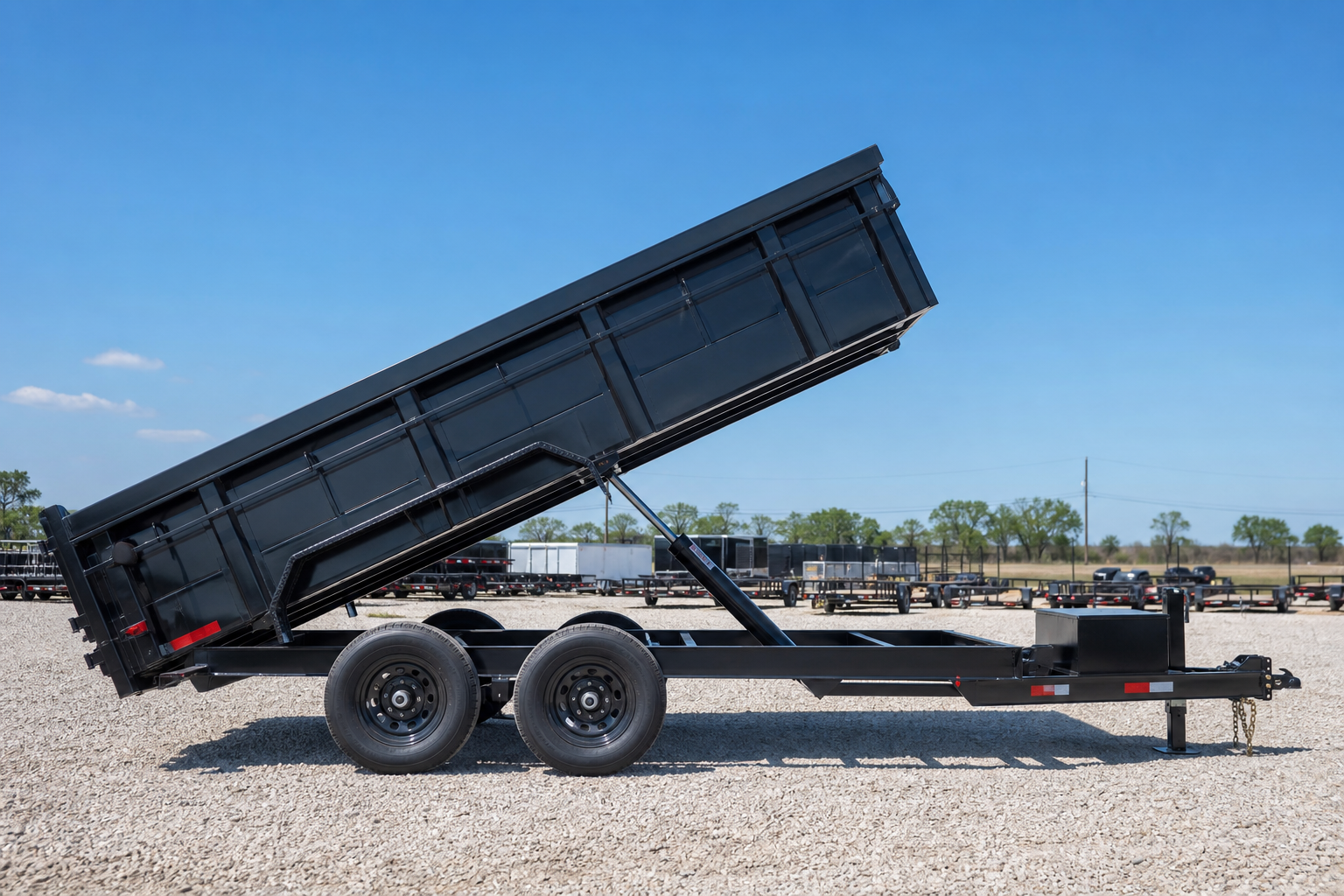
- Dump trailers: A full load of wet dirt or gravel can hit 10,000–14,000 lbs. Our dump trailers range from 7,000 lb to 25,900 lb GVWR — match it to what you’re dumping.
- Equipment trailers: A compact excavator or skid steer typically weighs 8,000–12,000 lbs. Add the trailer’s own weight and you need at least a 14,000–16,000 lb GVWR.
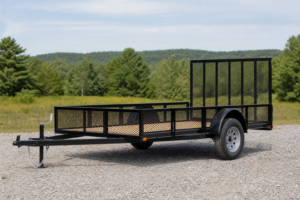
- Utility trailers: For weekend DIY, 3,500–7,000 lb GVWR is usually plenty. Commercial landscapers often need 10,000 lb or more.
- Car haulers: Two cars can easily hit 8,000–10,000 lbs combined. Our car hauler trailers go up to 14,000 lb GVWR for heavier vehicles.
- Livestock trailers: A loaded 20-ft cattle trailer can top 12,000 lbs fast. Check our livestock trailers for the right fit.
Step 2: Add a Safety Buffer
Never spec a trailer at exactly the weight you plan to haul. A 10–15% buffer is the industry standard. If your max load is 9,000 lbs, choose a 10,000 lb GVWR trailer, not a 9,000 lb one. Overloading causes premature axle wear, tire blowouts, brake fade, and — in Texas — legal liability if you’re pulled over.
The formula is simple:
Minimum GVWR = (Max cargo weight + trailer empty weight) x 1.10
Step 3: Check Your Truck’s Towing Capacity
Your truck has a maximum tow rating — and your trailer’s GVWR must stay under it. A Ford F-250 Super Duty with a gooseneck hitch can tow up to 22,800 lbs. A half-ton F-150 maxes out around 13,000 lbs depending on configuration. Always check your truck’s door jamb sticker or owner’s manual for the actual rated capacity — not the marketing number.
Also check your truck’s Gross Combined Weight Rating (GCWR), which is the max total weight of your truck + trailer + cargo + passengers combined. This is often the real limit — not just the trailer tow rating.
Step 4: Understand Axle Count and Weight Distribution
GVWR is split across axles. A 14,000 lb GVWR tandem axle trailer uses two 7,000 lb axles. If one axle carries more load than the other (due to poor weight distribution), you can overload that axle even if total weight is under GVWR. Load your trailer with heavy items forward and centered whenever possible.
- Single axle: Typically 3,500–7,000 lb GVWR. Lighter, lower cost, fine for small loads.
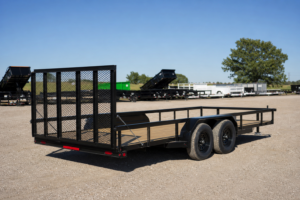
- Tandem axle: Typically 7,000–16,000 lb GVWR. More stable, better braking, handles heavier uneven loads.
- Triple axle / heavy duty: 18,000–25,900 lb GVWR. For serious commercial use.
Step 5: Know the Texas CDL and Brake Rules
In Texas, if your trailer’s GVWR exceeds 4,500 lbs, it must have functioning brakes. If your combined truck + trailer weight exceeds 26,001 lbs GVWR, you may need a commercial driver’s license (CDL). Most private-use trailers under 25,900 lb GVWR can be towed without a CDL, but always verify with TxDMV if you’re hauling commercially.
Common GVWR Recommendations by Use Case
| Use Case | Recommended GVWR | Trailer Type |
|---|---|---|
| Homeowner / DIY | 3,500 – 7,000 lbs | Utility, small dump |
| Landscaping (solo) | 7,000 – 10,000 lbs | Utility, dump |
| Landscaping (commercial) | 14,000 – 16,000 lbs | Dump, equipment |
| Construction equipment | 14,000 – 20,000 lbs | Equipment, gooseneck |
| Hotshot trucking | 16,000 – 25,900 lbs | Gooseneck, flatbed |
| Cattle / livestock | 14,000 – 20,000 lbs | Livestock, gooseneck |
| Car hauling | 10,000 – 14,000 lbs | Car hauler, tilt |
Our Top Trailer Recommendations by GVWR
Not sure which model fits your GVWR requirement? Here are some popular options we carry at Trailer Place:
- Diamond C LPD Dump Trailer — Available in 14,000 lb and 20,000 lb GVWR. One of the most popular commercial dump trailers in Texas.
- Iron Bull Equipment Trailer — 14,000–20,000 lb GVWR options. Built for serious work in Texas heat.
- Hotshot-ready gooseneck trailers — 20,000–25,900 lb GVWR for operators needing maximum payload without a CDL threshold.
Ready to Choose Your Trailer?
We’ve helped hundreds of Texas and Louisiana buyers find the right trailer for their needs — and we’ll help you too. Stop by our lot in Wharton, TX or call us at (979) 532-1486 and we’ll walk through your load requirements together. Financing is available, and we ship nationwide.
Browse our full inventory at trailerplace.com or check out our trailer weight ratings explained guide for a deeper dive into GVWR, GAWR, and payload calculations.