Running a tree service company in Texas means hauling heavy loads every day — logs, brush, wood chips, stumps, stump grinders, chippers, and skid steers. The right trailer is not a luxury; it is a core piece of your equipment. The wrong trailer costs you time, damages your gear, and can get you cited for overweight loads. This guide breaks down the best trailer types and models for Texas tree service crews in 2026.
What Tree Service Companies Actually Haul
Before picking a trailer, map out what your crew is moving on a typical job:
- Brush and debris — light but bulky; needs high sides or a tipping body
- Wood chips — heavy and loose; a dump trailer makes unloading much faster
- Cut logs and rounds — dense and heavy; watch your payload and GVWR limits
- Stump grinders — typically 1,500 to 4,000 lbs; needs a low-profile or equipment trailer with ramps
- Mini skid steers or Bobcats — 3,000 to 8,000 lbs; requires a heavy-duty equipment trailer or gooseneck
- Bucket trucks and chippers — these tow on their own, but you may tow a support trailer behind your service vehicle
Top Trailer Types for Tree Service Work
1. Dump Trailers — Best for Brush and Wood Chips
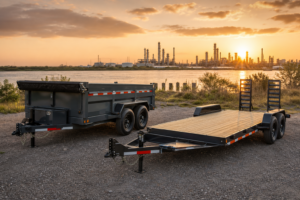
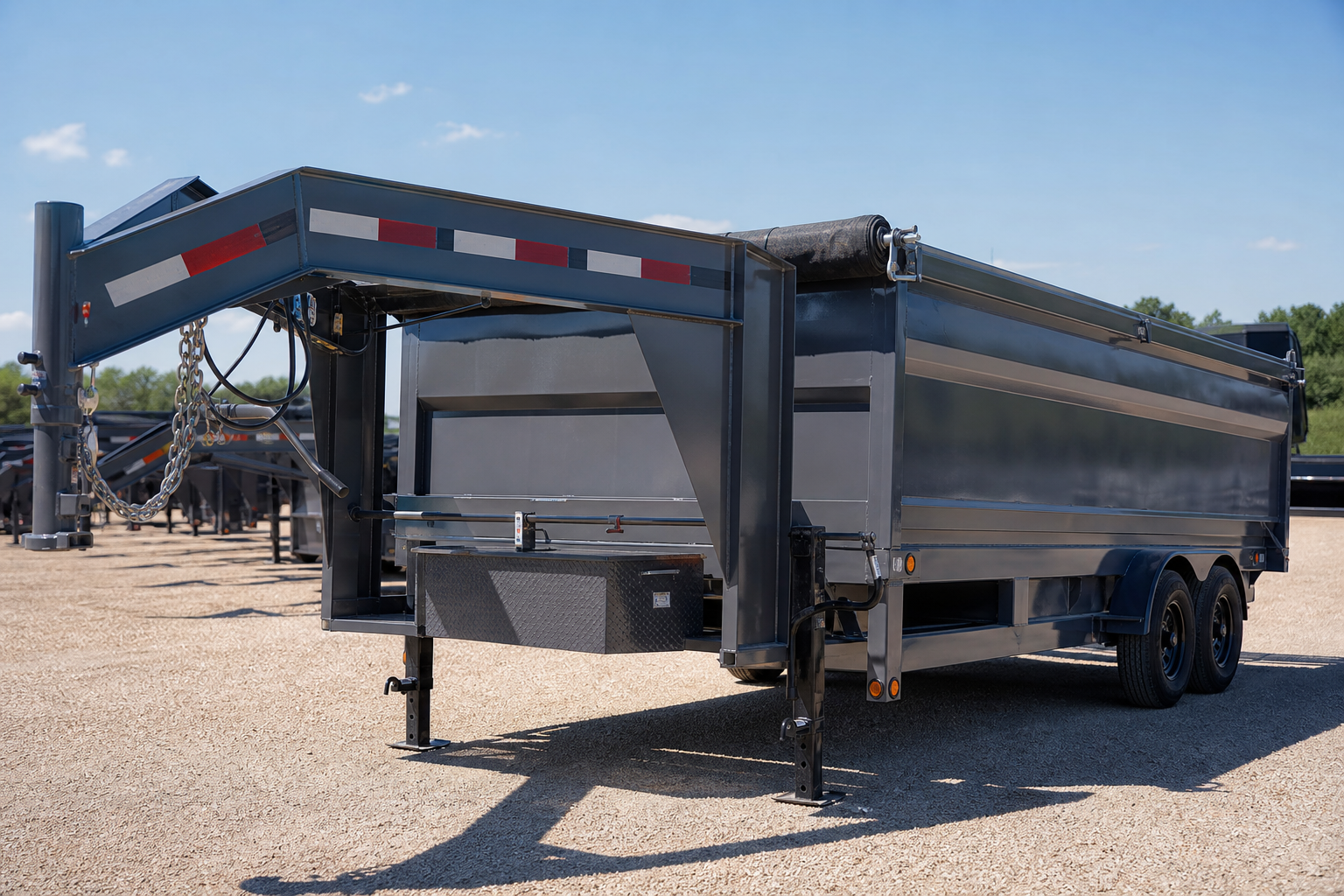
A dump trailer is the single most valuable piece of equipment for a tree service business that hauls chips and debris. Instead of unloading by hand or with a fork, you simply raise the bed and the job is done in seconds. Look for a 7×14 or 7×16 low-profile dump with at least a 14,000 lb GVWR and a scissor-lift hoist rated for the full payload.
Recommended models:
- Iron Bull DTB 7×14 — 14,000 lb GVWR, 2-speed scissor hoist, 2-foot sides standard
- Diamond C LPD 7×16 — 14,000 lb GVWR, low-profile design, available with extension boards
- Big Tex 14LP — popular budget option, 14,000 lb GVWR, solid for lighter loads
For tree service, we recommend the Iron Bull DTB or Diamond C LPD. Both are built with higher-quality steel and better paint systems than budget alternatives. Side walls hold up better when you’re banging brush and logs against them all day.
2. Equipment Trailers — Best for Stump Grinders and Small Machines
If you tow a stump grinder, mini skid, or compact track loader, you need a purpose-built equipment trailer. Look for a low deck height (under 24 inches loaded), heavy-duty ramps or a dovetail, and a GVWR matched to your heaviest machine plus some headroom.
- 7,000 lb GVWR — handles most walk-behind stump grinders and small utility equipment
- 10,000 to 14,000 lb GVWR — mid-size stump grinders (Vermeer SC60, Carlton 6012), mini skid steers
- 20,000+ lb GVWR — full-size tracked machines, large stump grinders like the Vermeer SC852
The Diamond C HDT (Heavy Duty Tilt) is a strong choice for tree service crews who load equipment solo — no ramps to deploy, just drive straight on. Available from 10,000 to 14,000 lb GVWR.
3. Utility Trailers — Best for Ladders, Saws, and Misc Gear
Many tree crews run a utility trailer alongside their dump trailer as a second unit — hauling chainsaws, pole saws, rope systems, blowers, and hand tools. A 6×10 or 7×14 single-axle utility with mesh sides is lightweight, easy to maneuver in tight residential neighborhoods, and cheap to register and insure.
4. Flatbed Trailers — Best for Logs and Bulky Material
If your crew processes logs for firewood sales or lumber, a flatbed trailer gives you maximum flexibility. No sides to work around, easy to load with a loader or grapple, and simple to clean. Look for a gooseneck flatbed if you routinely haul large rounds or pulpwood — the extra stability and weight capacity make a real difference on Texas highways.
Gooseneck or Bumper Pull?
For most tree service setups, a bumper pull is sufficient for trailers under 14,000 lb GVWR. But if you regularly haul machines over 8,000 lbs or need to run a 20-foot or longer flatbed, a gooseneck trailer gives you far better stability and legal payload capacity on Texas roads. Gooseneck hitches put the tongue weight over the rear axle of your truck rather than on the receiver, which translates to better handling when loaded heavy.
Read our gooseneck vs fifth wheel comparison if you’re not sure which hitch setup fits your truck.
Tow Vehicle Considerations for Tree Service Trucks
Tree service trailers loaded with brush, chips, or a stump grinder can easily hit 8,000 to 14,000 lbs combined. That means your tow vehicle needs to be up to the task:
- Half-ton trucks (F-150, Silverado 1500, Ram 1500) — only suitable for light utility trailers under 8,000 lb GVWR
- 3/4-ton trucks (F-250, Ram 2500, Silverado 2500HD) — handle most bumper-pull dump and equipment trailers
- 1-ton trucks (F-350, Ram 3500, Silverado 3500HD) — required for larger gooseneck setups and heavy equipment trailers
Check out our Ram 2500 towing guide and Chevy Silverado 3500HD towing guide for specific payload and towing capacity numbers.
Texas Regulations for Tree Service Trailers
Running an overloaded trailer in Texas is a real risk — TxDOT weighs commercial vehicles at ports of entry and at portable weigh stations. Key rules to know:
- Trailers over 26,000 lb GVWR require a commercial driver’s license (CDL) to operate
- Most tree service trailers fall under 26,000 lb and do not require a CDL
- All trailers must be registered and display current license plates
- Trailers over 4,500 lbs GVWR require breakaway brakes
- Load must be secured — loose brush or logs must be tarped or contained
For a full breakdown, read our Texas CDL requirements guide and Texas trailer registration guide.
Why Tree Service Crews in Texas Trust Trailer Place
Trailer Place is a family-owned dealership in Wharton, TX (moving to Rosenberg mid-2026), and we have been outfitting work crews across Texas for years. We carry Iron Bull, Diamond C, and a full lineup of dump, equipment, flatbed, and utility trailers ready to work as hard as you do. We also offer in-house financing — including options for business owners with limited credit history.
Call us at (979) 532-1486 and tell us what you haul. We will match you to the right trailer for your operation, your truck, and your budget. Nationwide shipping is available if you are not local to Central Texas.