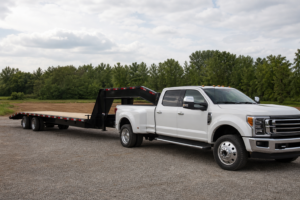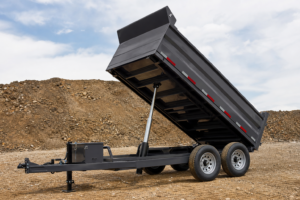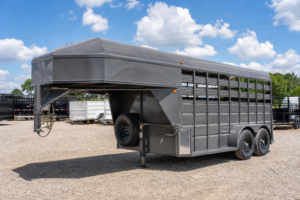
Nothing ends a trip faster than a wheel bearing failure on the side of Highway 59. A seized or “spun” bearing can rip apart a spindle, tear off a wheel, or drop your load on the roadway — and it is one of the most preventable failures in trailer ownership. Whether you are running a Diamond C dump trailer to a job site every day or towing a livestock trailer twice a month, knowing how your trailer’s wheel bearings work (and when to service them) will save you money, downtime, and a dangerous roadside repair.
What Trailer Wheel Bearings Actually Do
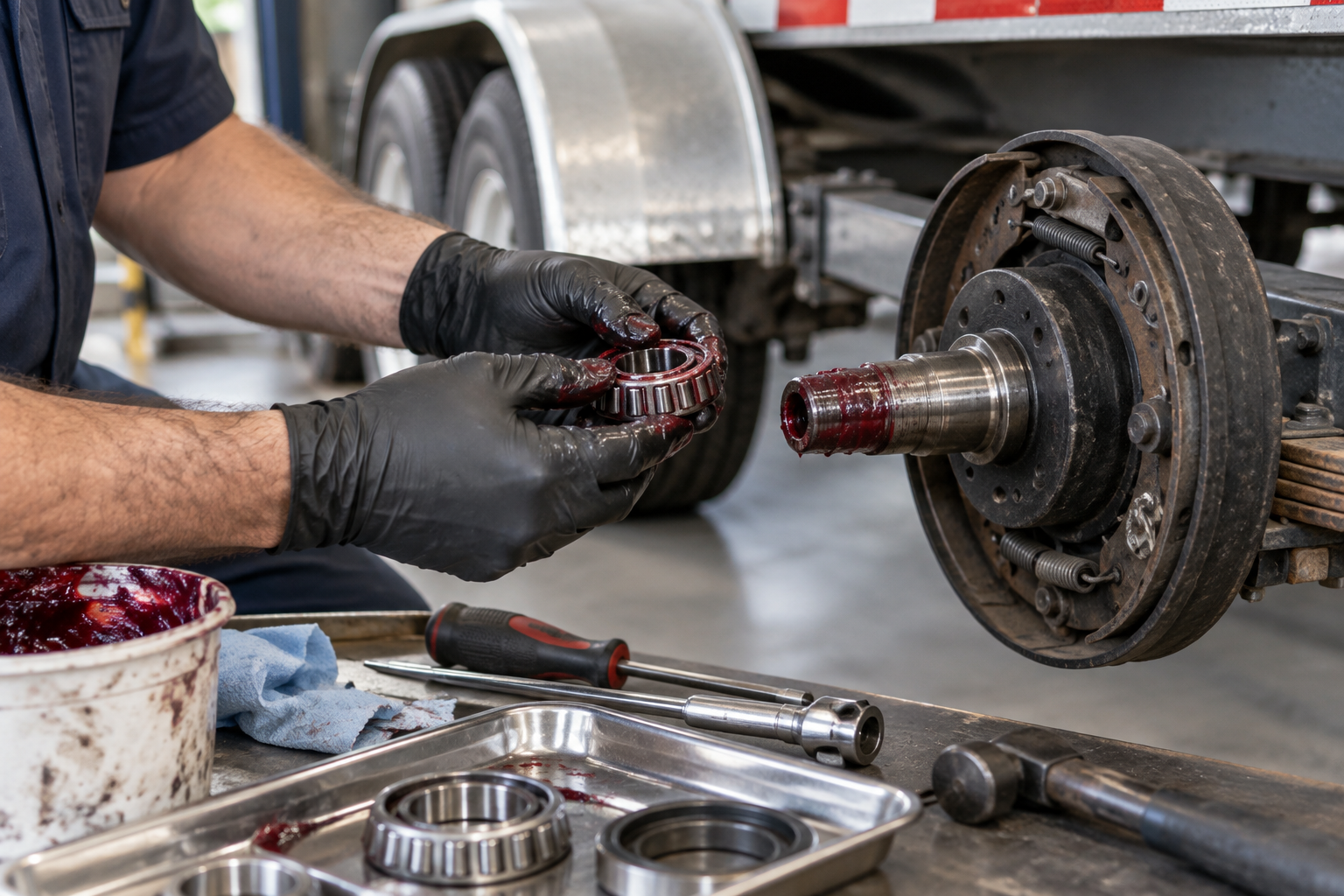
Every trailer axle rides on a set of tapered roller bearings pressed into the wheel hub, packed with grease, and sealed against water and road grit. Unlike your truck, a trailer has no engine feeding oil to the axle — the bearings only have whatever grease is packed inside the hub. That grease breaks down with heat, gets contaminated by water crossing low spots or boat ramps, and slowly works its way out through worn seals. Once the grease is gone, metal-on-metal contact generates heat fast enough to discolor a spindle in a few miles, and a “hot hub” repair on the road can run several hundred dollars in towing and parts versus a $15-30 service kit done in your driveway.
Signs Your Bearings Need Attention
- Hub feels hot to the touch after a short drive (warm is normal, too hot to hold your hand on is not)
- Grinding, growling, or whining noise from a wheel while towing
- Play or wobble when you grab the tire at 12 and 6 o’clock and rock it
- Grease streaks on the inside of the rim or backing plate, meaning a seal has failed
- Discolored or blued spindle visible when the hub is pulled — a sign the bearing already ran dry at some point
Any of these on a loaded gooseneck or equipment trailer is a stop-and-inspect situation, not a “finish the trip and deal with it later” situation.
Service Intervals That Actually Fit Texas Trailer Use
Manufacturers generally recommend repacking bearings every 10,000-12,000 miles or annually, whichever comes first — but real-world Texas and Louisiana use often calls for tighter intervals. If you cross low-water crossings, launch boats, haul livestock through wash-out pens, or run a dump trailer through standing water on a job site, water intrusion is the real enemy, not mileage. In those cases, pull the hubs and inspect twice a year regardless of mileage. Trailers that sit for long stretches between uses (a seasonal livestock trailer or a hunting camp utility trailer) should also get a pre-season check, since seals dry out and grease settles even when the axle never turns.
Bearing type matters too. Standard tapered roller bearings need manual grease packing with a bearing packer or by hand. Many newer Diamond C and Iron Bull axles come with EZ Lube fittings that let you pump fresh grease straight through the spindle with a grease gun until clean grease purges out the back — a five-minute job per side that most owners can do without pulling the hub at all, though a full teardown and seal inspection is still worth doing annually.
Axle Capacity and Bearing Load — Why GVWR Matters Here Too
Bearing wear accelerates dramatically when a trailer is loaded near or over its rated GVWR, since the bearing races take more radial load with every mile. This is one more reason to match your trailer’s axle rating to your actual hauling weight instead of buying the cheapest unit and overloading it — our GVWR and payload guide breaks down how to calculate the load correctly before you buy. If you are running heavier and hotter than a single axle can handle without excessive bearing wear, it may be time to step up to a tandem axle setup, which we cover in our single vs. tandem axle comparison.
What We Recommend at Trailer Place
Every new trailer we sell out of Wharton, TX — from a work-ready utility trailer to a heavy equipment trailer hauling skid steers — leaves the lot with properly packed bearings and functioning seals. Our Diamond C and Iron Bull lineups both offer EZ Lube axle options that make ongoing maintenance simple for owners who want to do their own upkeep, and our in-house STAR brand livestock trailers are built with the same attention to axle and hub quality. Our service department also performs bearing repacks and full axle inspections if you would rather leave it to us — and if you are unsure what your maintenance schedule should look like across your whole trailer, our trailer maintenance checklist covers the rest of the annual to-do list beyond just bearings.
Buying a trailer with financing available makes it easier to choose the right axle capacity up front instead of stretching a light-duty trailer past its limits — see our financing guide for options with approved credit.
Whether you need a bearing service on a trailer you already own or you are ready to buy a trailer built to hold up to Texas and Louisiana work, call Trailer Place in Wharton, TX at (979) 532-1486. We are family-owned, we build the STAR brand in-house, and we ship nationwide.