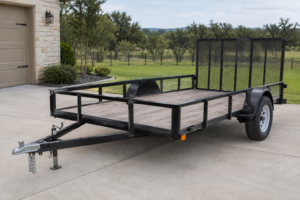
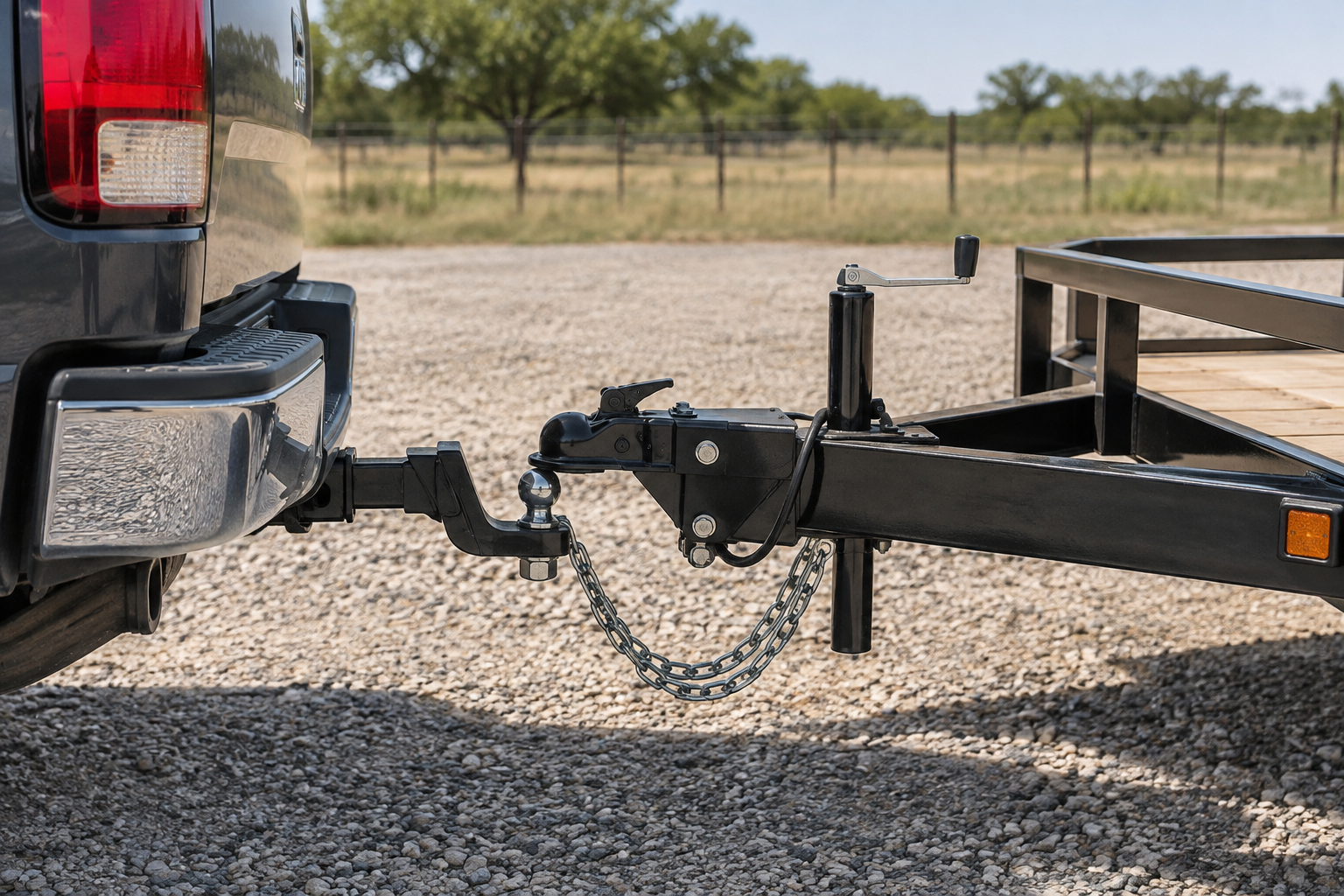
A trailer that rides nose-up or nose-down is harder to control, wears tires unevenly and can overload one axle. Getting it level is usually a simple measurement and one inexpensive part.
How to measure for a level tow
- Park the loaded truck and trailer on flat, hard ground with the trailer coupler resting on the ball.
- Measure from the ground to the top of the hitch receiver opening on the truck.
- Measure from the ground to the bottom of the coupler socket on the trailer, with the trailer level front to back.
- The difference between the two numbers is the drop or rise you need in the ball mount.
Drop hitch, rise hitch or adjustable
If the coupler sits lower than the receiver, you need a drop ball mount. If it sits higher, as with lifted trucks, you need a rise. An adjustable ball mount is handy when you tow several trailers, but make sure its rating matches your heaviest trailer. See our hitch receiver classes guide for weight ratings.
Signs your trailer is not level
- Tongue-heavy trailers push the truck rear down and lighten the front steering.
- Tail-heavy trailers can sway, especially at highway speed.
- Uneven tire wear or one hot hub often points to an unbalanced load.
Other fixes to try
- Shift cargo so roughly 10 to 15 percent of the weight sits on the tongue. Our tongue weight guide covers the math.
- Check the ball size matches the coupler.
- Consider a weight distribution hitch for heavier bumper-pull loads.
- Gooseneck setups are different: the bed height sets the level, so see our gooseneck trailers.
Which trailers need the most attention?
Tall enclosed cargo trailers, dump trailers and utility trailers all ride differently depending on their axle and tongue design, so measure each one.
Get set up at Trailer Place
Trailer Place is a family-owned dealer in Wharton, TX (moving to Rosenberg mid-2026) serving Texas and Louisiana, with in-house STAR builds, financing and nationwide shipping. Call (979) 532-1486 and we will help you match hitch and trailer.