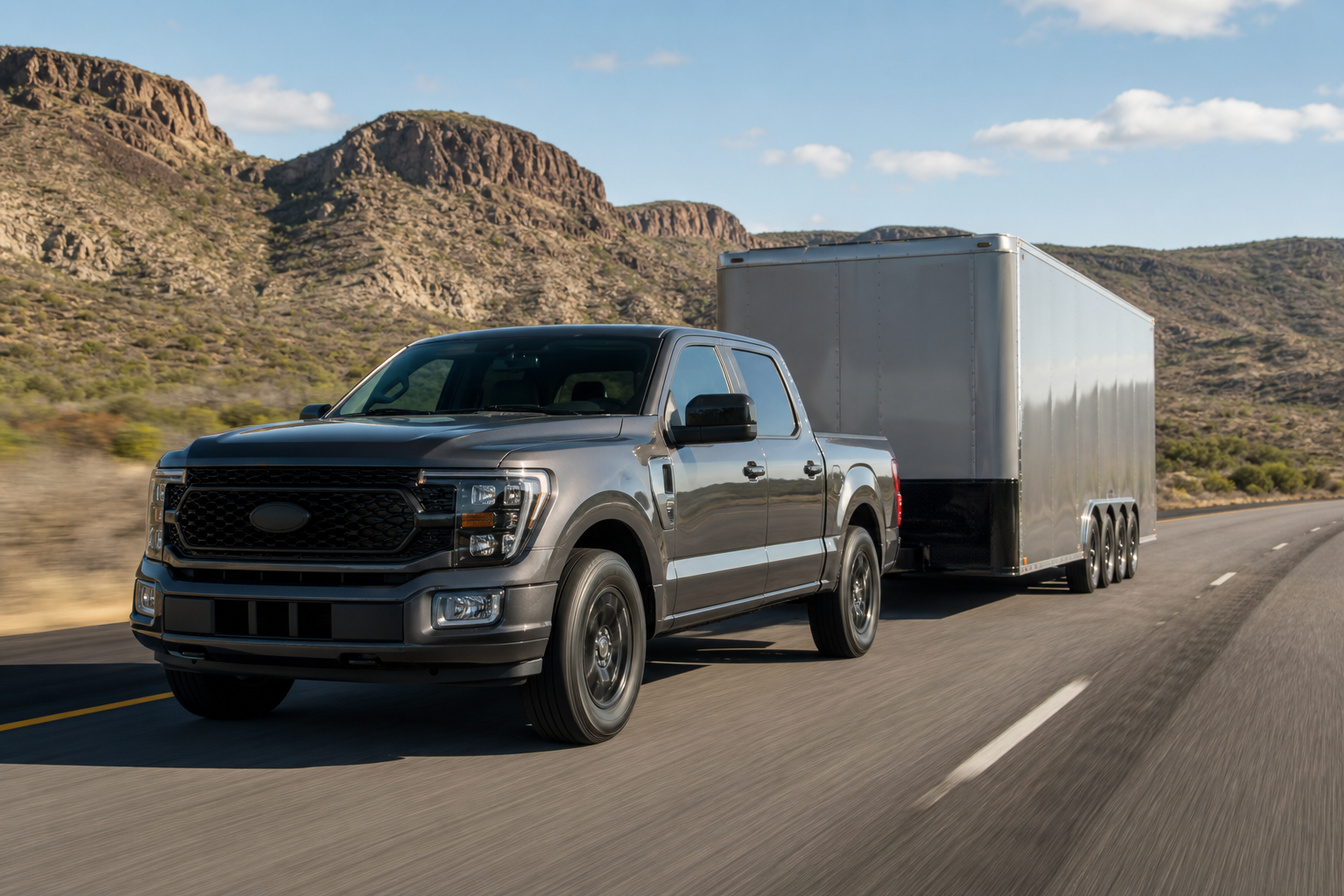
If you’ve ever felt your truck’s front end go light while towing a heavy bumper pull trailer, you already know what tongue weight does to your rig. A weight distribution hitch (WDH) is designed to fix exactly that problem — spreading the trailer’s tongue weight across all four wheels of your tow vehicle instead of just hammering the rear axle.
But do you actually need one? The short answer is: it depends on your trailer weight and your truck’s tongue weight rating. Here’s what every Texas trailer owner should know before hitching up.
What Is a Weight Distribution Hitch?
A weight distribution hitch (also called a load-leveling hitch) uses spring bars tensioned between the hitch head and the trailer A-frame to redistribute downward force. Instead of the full tongue weight pressing down on your rear axle and lifting your front wheels, the load gets spread across the entire vehicle and trailer frame.
The result: your front wheels stay planted, your steering stays precise, and your brake pedal actually works the way it should. Without a WDH on a heavy trailer, your front-end lift can reduce steering response by 20-30% and significantly increase stopping distance.
When Do You Need a Weight Distribution Hitch?
The general rule of thumb in the towing industry: use a weight distribution hitch when your trailer’s loaded tongue weight exceeds 10% of your tow vehicle’s GVWR — or when your truck manufacturer requires it at a certain trailer weight.
Most truck manuals specify something like: “Weight distribution hitch required for trailers over 5,000 lbs GTW.” Check your owner’s manual — this is not optional language. If your manual says it’s required, your warranty and liability depend on it.
Here’s a quick reference for common tow vehicles in Texas:
| Tow Vehicle | Max GTW Without WDH | Max GTW With WDH |
|---|---|---|
| Ford F-150 (half-ton) | 5,000 – 6,000 lbs | Up to 14,000 lbs |
| Ram 2500 (3/4-ton) | 8,000 – 10,000 lbs | Up to 20,000 lbs |
| Ford F-350 (1-ton SRW) | 10,000 – 12,000 lbs | Up to 21,000 lbs |
| Chevy Silverado 2500HD | 8,500 – 10,000 lbs | Up to 18,500 lbs |
Note: Always verify your specific truck’s ratings in the owner’s manual and on the door jamb sticker — configurations vary significantly by engine, cab, and bed combination.
Which Trailers Require a Weight Distribution Hitch?
Here’s where it gets practical for Texas buyers. Most of the heavier bumper pull trailers we sell at Trailer Place will put you in WDH territory once you load them up:
- Dump trailers (10,000 – 14,000 lb GVWR) — Almost always require a WDH when loaded. A 14,000 lb dump trailer with 1,400 lbs of tongue weight will cause serious front-end lift on any half-ton or light 3/4-ton truck. See our dump trailer inventory.
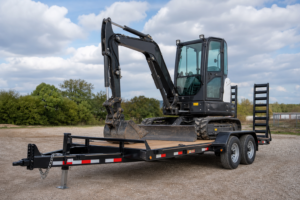
- Equipment trailers (12,000 – 25,900 lb GVWR) — Definitely require WDH for bumper pull models. If you’re moving a skid steer or mini excavator, load placement matters as much as the hitch. Browse our equipment trailers.
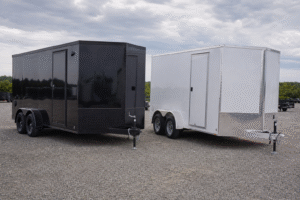
- Enclosed cargo trailers (7,000 – 10,000 lb GVWR) — Larger 8.5×24 or 8.5×28 enclosed trailers loaded with tools and materials will exceed the no-WDH threshold on most trucks. Check our enclosed cargo trailers.
- Flatbed trailers (14,000+ lb GVWR) — Nearly always require WDH at anything close to capacity. See our flatbed trailer inventory.
- Livestock trailers — A full load of cattle in a 24ft bumper pull can push tongue weight well past 1,500 lbs. Our livestock trailers include models up to 14,000 lb GVWR.
If you’re towing a gooseneck trailer, a WDH does not apply — gooseneck hitches load over the rear axle and the weight distribution is handled differently by design. The same goes for fifth-wheel setups.
Types of Weight Distribution Hitches
Not all WDH systems are the same. Here’s a quick breakdown of what’s on the market:
Round Bar vs. Trunnion Bar
Round bar hitches (like the Equalizer or Reese Towpower Pro) use round spring bars that clip into a head mounted bracket. They’re widely available and less expensive, typically $300-$600 for a quality unit. Good for most Texas towing scenarios.
Trunnion bar hitches (like the B&W Tow & Stow or Curt TruTrack) use flat bars that sit lower and connect differently. They’re often easier to hook up and provide a smoother ride. Expect to pay $400-$900 for a solid trunnion system.
WDH With Integrated Sway Control
Some systems (like the Equalizer 4-Point) include built-in sway control in addition to weight distribution. For long Texas highway runs — especially in crosswind country between Houston and San Antonio — integrated sway control is worth considering if you’re towing a large enclosed trailer or livestock trailer in high winds.
What to Look for When Buying a WDH
- GTW rating: Match the hitch’s gross trailer weight (GTW) rating to your trailer’s loaded weight
- Tongue weight rating: Your WDH needs a tongue weight capacity at or above your actual tongue weight (typically 10-15% of GTW)
- Ball mount size: 2-5/16″ ball is standard for trailers over 6,000 lbs; 1-7/8″ or 2″ for lighter loads
- Receiver size: Most HD trucks use a 2-1/2″ receiver; most midsize and half-tons use 2″
- Ease of hookup: If you’re hooking up daily, spring bar removal convenience matters
Do You Need Sway Control Too?
Sway control and weight distribution solve different problems. WDH addresses front-end lift and brake performance. Sway control addresses trailer oscillation (the dreaded back-and-forth fishtail).
If you’re towing a large bumper pull — particularly a long enclosed trailer or a livestock trailer on open Texas highways — adding sway control (either as a friction bar add-on or integrated into your WDH) is a smart move. Strong crosswinds and turbulence from 18-wheelers are a reality on I-10, I-45, and US-59.
Talk to Our Team Before You Buy
At Trailer Place, we help Texas buyers figure out not just which trailer fits their needs, but what equipment they need to tow it safely. Whether you’re picking up a Diamond C dump trailer, an Iron Bull equipment trailer, or a Kaufman car hauler, we’ll walk you through your truck’s ratings and what hitch setup you need to tow safely and legally.
We’re a family-owned dealership in Wharton, TX (moving to Rosenberg mid-2026) serving all of Texas and Louisiana. Financing is available, and we offer nationwide shipping on most trailer models.
Call us at (979) 532-1486 or browse our trailer inventory online. We’re happy to answer any questions about towing setups, hitch requirements, or which trailer is the right fit for your truck and your job.
Also see our related guides: trailer brake controller guide for Texas truck owners, trailer towing tips for beginners, and trailer weight ratings explained (GVWR, GAWR).