Aluminum vs Steel Livestock Trailers: Which Is Right for You?
If you haul cattle, horses, hogs, or goats in Texas, you have two main choices when it comes to trailer material: aluminum or steel. Both have loyal fans, and both have real tradeoffs. This guide breaks down the key differences so you can pick the right trailer for your operation.
Weight: Aluminum Wins
Aluminum livestock trailers are significantly lighter than comparable steel trailers — often 1,000 to 2,000 lbs lighter at the same length and configuration. That extra weight capacity can mean hauling one more cow, a couple more hogs, or simply staying within your truck’s tow rating with room to spare.
If you drive a 3/4-ton truck and are pushing the limits on towing capacity, aluminum may be the difference between a legal, safe haul and an overloaded one. For ranchers running a 1-ton diesel like a Ram 3500 or F-350, steel is still totally manageable — but aluminum gives you a built-in buffer.
Corrosion and Rust: Aluminum Wins Again
In the Texas and Louisiana Gulf Coast climate, rust is a real enemy. Steel livestock trailers need regular maintenance — painting, touch-ups, and rustproofing — especially if they see mud, manure, and rain on a regular basis. Neglected steel trailers can rust through the floor over time, which is both a structural and animal safety issue.
Aluminum does not rust. It may oxidize and look dull over time, but it won’t corrode or weaken the way steel does. If you want lower long-term maintenance and plan to keep the trailer 10, 15, or 20+ years, aluminum’s durability advantage is real.
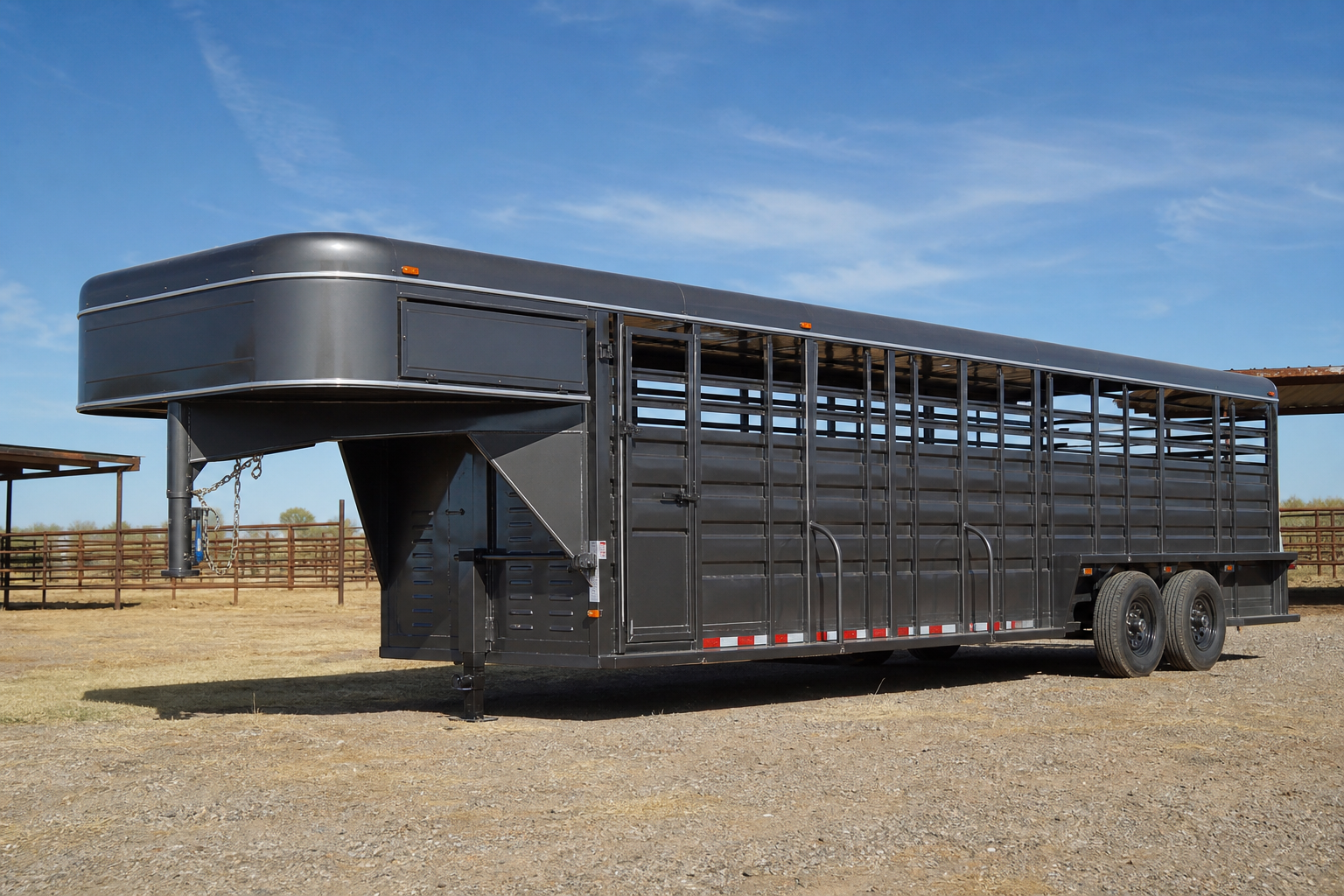
That said, there’s an important exception: galvanized steel. Our in-house STAR brand trailers feature heavy galvanized steel construction that resists rust far better than standard painted steel. Galvanized trailers sit between plain steel and aluminum in terms of corrosion resistance and price — and they’re built right here in Wharton, TX.
Durability and Strength: Steel Holds the Edge
Steel is denser and more impact-resistant than aluminum. If you’re hauling large commercial cattle operations with heavy, aggressive animals, or if your trailer gets banged around loading at the pens, steel can take more punishment without denting or bending.
Aluminum is strong, but it’s more prone to dents and dings. It also requires specialized welding for repairs — not every rural shop can work on aluminum. Steel trailers can be welded and repaired almost anywhere in Texas.
For most livestock uses — cattle, horses, hogs, sheep, goats — both materials are more than adequate. But if you’re running a high-volume commercial operation with big bulls and heavy loads, many ranchers still prefer steel for its raw toughness.
Price: Steel Is Cheaper Upfront
Steel livestock trailers cost less to manufacture, which means lower purchase prices. A quality steel livestock trailer might run $6,500 to $18,000 depending on size and brand. Comparable aluminum trailers typically cost $2,000 to $5,000 more at the same length and configuration.
Over time, though, the math changes. Aluminum’s lower maintenance costs, better resale value, and longer lifespan can close that gap — or even tip in aluminum’s favor if you hold the trailer for many years.
Brands We Carry: Steel and Aluminum Options
At Trailer Place, we carry both materials so you can compare side by side:
- Calico Trailers — Steel livestock and horse trailers built for Texas ranch conditions. Excellent value, tough construction, popular with local ranchers.
- W-W Trailers — Steel livestock trailers with a long reputation for reliability. Popular for cattle and horses across South Texas.
- Aluma Trailers — Premium all-aluminum trailers including livestock and utility models. Lightweight, rust-proof, and built to last decades.
- STAR Brand (in-house) — Our own galvanized steel cattle trailers, manufactured right here in Wharton, TX. Built heavy-duty for the Gulf Coast climate.
Side-by-Side Comparison
| Feature | Aluminum | Steel (Standard) | Galvanized Steel |
|---|---|---|---|
| Weight | Lighter (saves 1,000-2,000 lbs) | Heavier | Heavier |
| Rust Resistance | Excellent (won’t rust) | Poor without upkeep | Good |
| Upfront Cost | Higher ($2k-$5k more) | Lower | Mid-range |
| Repairability | Requires aluminum welder | Easy anywhere | Easy anywhere |
| Durability vs Impact | Good, dents more easily | Excellent | Excellent |
| Resale Value | Higher long-term | Moderate | Good |
| Best For | Long-term ownership, weight savings | Budget buyers, heavy use | Gulf Coast, corrosion resistance |
Which Should You Choose?
Here’s a simple way to decide:
- Choose aluminum if you want lower maintenance, plan to keep the trailer long-term, haul horses or lighter livestock, or need to maximize payload on a lighter-duty truck.
- Choose galvanized steel if you want durability with better rust protection than standard steel, at a lower price than aluminum. Great choice for the Texas Gulf Coast.
- Choose standard steel if you’re on a tight budget, want easy repairs anywhere, or haul heavy cattle where raw toughness matters most.
Shop Livestock Trailers at Trailer Place
Trailer Place is a family-owned dealership in Wharton, TX (moving to Rosenberg mid-2026) serving ranchers across Texas and Louisiana. We carry both aluminum and steel livestock trailers and can walk you through the tradeoffs for your specific operation and truck.
Financing is available for all trailer types — even with limited or imperfect credit. Nationwide shipping available.
Call us at (979) 532-1486 or browse our livestock trailer inventory to find the right trailer for your ranch.
Also read: How to Choose a Livestock Trailer in Texas, Best Trailers for Texas Ranchers, and Calico vs Iron Bull Livestock Trailers.