When disaster strikes in Texas, whether it’s a Gulf Coast hurricane, a Hill Country flash flood, or a winter storm that knocks out power across the state, emergency response organizations need to move fast. The right trailer makes the difference between a smooth operation and a logistical nightmare. At Trailer Place in Wharton, TX, we work with volunteer fire departments, emergency management offices, nonprofit relief teams, and county emergency coordinators across Texas and Louisiana. Here’s what you need to know about choosing a trailer for disaster relief and emergency response work.
Why Trailers Are Essential for Emergency Response
Trailers give emergency teams flexibility that no single vehicle can match. You can stage a trailer at a distribution site and leave it, swap it between tow vehicles, carry oversized equipment that won’t fit in any truck bed, and deploy multiple units to different parts of a disaster zone simultaneously. For organizations managing hurricanes, floods, or tornadoes in Texas, trailers are often the backbone of relief logistics.
Top 5 Trailer Types for Disaster Relief Work
1. Enclosed Cargo Trailers — Supply Storage and Mobile Command
Enclosed cargo trailers are the workhorses of organized disaster relief. They protect food, water, medical supplies, and equipment from the elements while in transit or staged at a distribution point. An 8.5×20 or 8.5×24 enclosed trailer gives a team enough space to carry pallets of bottled water, generator fuel, tarps, chainsaws, and first aid supplies in a single load. Some organizations outfit enclosed trailers as mobile command units with lighting, power strips, and communication equipment.
Look for a trailer with at least 7 feet of interior height, a rear ramp door and a side door for easy access, and E-track on the walls so you can secure shifting cargo. Cargo Craft and Alcom are two of our most popular enclosed trailer brands for heavy-duty utility work. Price range: $6,500–$18,000 depending on size and options.
2. Utility Trailers — Fast Debris Clearance and General Hauling
Utility trailers are fast to deploy and versatile. A 6×12 or 7×14 utility trailer can move chainsaws and fallen limb debris from neighborhood cleanup operations, carry a small generator and lighting equipment, or shuttle supplies to areas where a large truck and trailer combo would have trouble navigating storm debris. They’re inexpensive to own, easy to store, and can be towed by most half-ton and three-quarter-ton trucks.
For emergency response use, choose a utility trailer with 3,500–5,200 lb GVWR, 2-inch treated wood deck, and stake pocket sides that accept extensions. Price range: $1,500–$3,800.
3. Dump Trailers — Debris Removal and Cleanup Operations
After a major storm, debris removal is one of the most labor-intensive parts of recovery. A dump trailer — typically a 7×14 or 83″x16″ unit with a 10,000–14,000 lb GVWR — lets a crew load branches, roofing debris, and household items and dump them quickly at a waste staging area without manually unloading. Organizations doing neighborhood cleanup or working alongside county road departments during disaster recovery often find a dump trailer pays for itself in the first major event.
Iron Bull and Diamond C both make heavy-duty dump trailers that hold up to repeated use under demanding conditions. We recommend the Iron Bull DTB 14,000 lb or the Diamond C LPD 12,000 lb for organizations that need a workhorse dump trailer. See our comparison post: Iron Bull DTB vs Diamond C LPD. Price range: $7,500–$14,500.
4. Equipment Trailers — Moving Generators, Skid Steers, and Heavy Gear
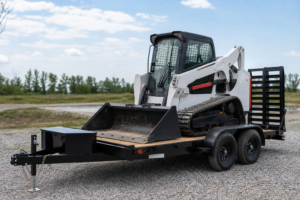
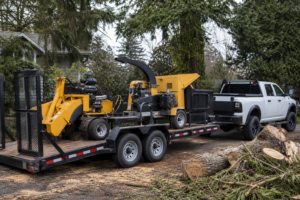
Large-scale disaster response often involves moving heavy equipment: towable generators, skid steers for debris removal, water pump trailers, or temporary HVAC units. A heavy-duty equipment trailer with a 14,000–22,000 lb GVWR, a low-profile deck, and a hydraulic or gravity-tilt design is purpose-built for this type of load. County emergency management offices, utility cooperatives, and large nonprofits often keep an equipment trailer on standby for exactly these situations.
For equipment in the 5,000–10,000 lb range, a 20ft to 24ft gooseneck equipment trailer gives you the most flexibility. Diamond C and Kaufman make reliable gooseneck equipment trailers built for Texas working conditions. Price range: $8,000–$22,000.
5. Flatbed Trailers — Versatile Staging and Transport
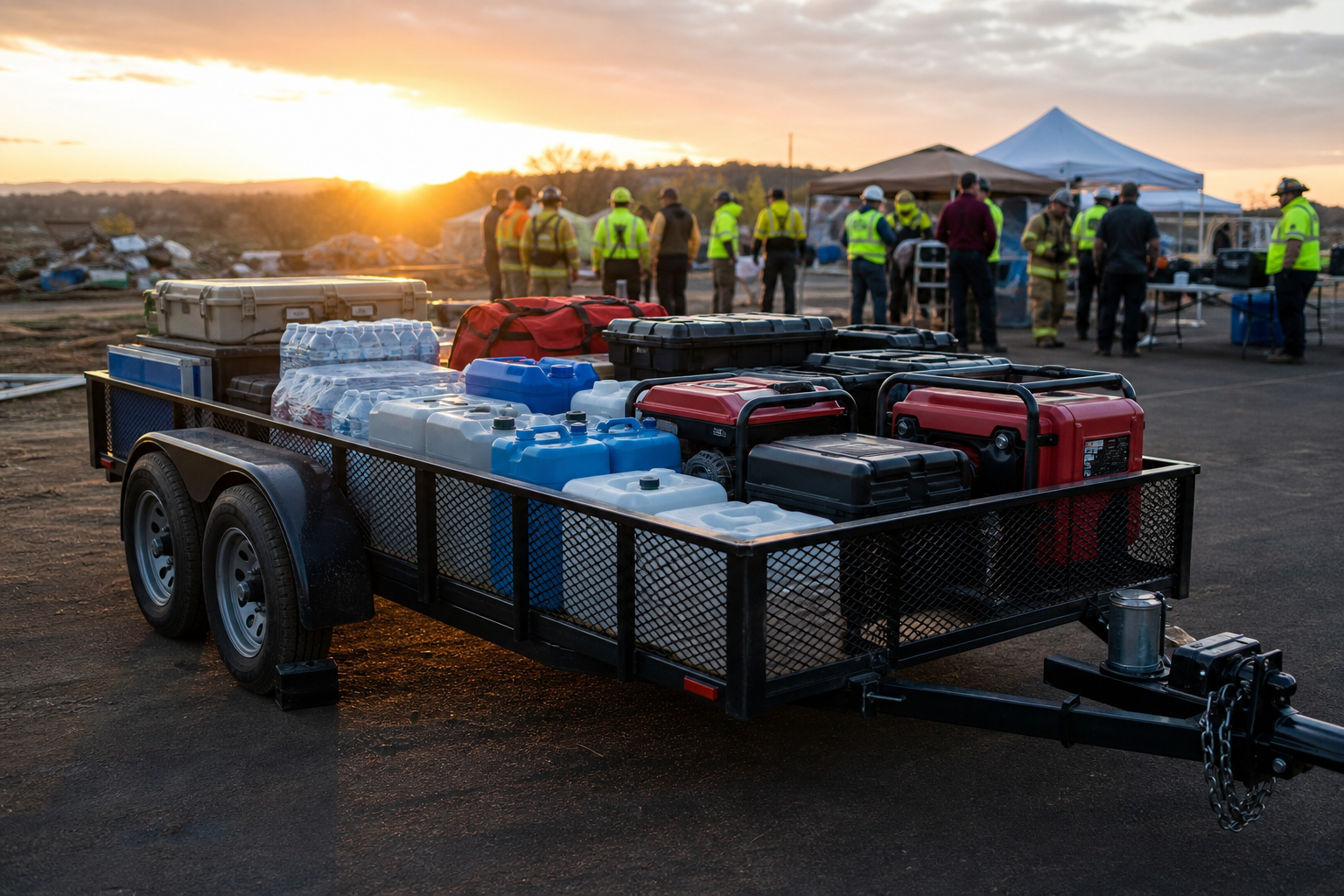
Flatbed trailers offer maximum flexibility when you don’t know exactly what you’ll need to haul. For relief organizations, a 20ft flatbed can carry pallets of water, a forklift load of supplies, or large equipment that would be difficult to load into an enclosed trailer. The open design allows quick loading from any angle with a forklift or pallet jack. A gooseneck flatbed with a 25,000 lb GVWR is also ideal for moving heavy temporary structures or modular equipment.
Trailer Selection Guide by Organization Type
| Organization Type | Recommended Trailer | GVWR | Est. Price |
|---|---|---|---|
| Volunteer fire department | 7×16 or 8.5×20 enclosed | 7,000–9,990 lb | $6,500–$10,500 |
| County emergency mgmt. | 20ft gooseneck equipment | 14,000–22,000 lb | $9,500–$18,000 |
| Nonprofit relief org. | 8.5×24 enclosed + utility | 9,990 lb + 3,500 lb | $10,000–$15,000 |
| Municipal public works | 14ft or 16ft dump trailer | 12,000–14,000 lb | $9,500–$14,000 |
| Storm cleanup crew | 7×14 utility + dump combo | 5,200 + 10,000 lb | $3,500–$11,000 |
Important Features for Emergency Response Trailers
- Electric brakes on all axles — Critical for loaded trailers in emergency situations. Don’t compromise on braking. Read our guide to electric vs surge brakes.
- LED lighting throughout — Emergency response often happens at night. Bright, reliable lighting is non-negotiable.
- Spare tire mount — A flat tire on a relief supply trailer during a disaster is a serious problem. Always carry a mounted spare.
- Treated wood decking or aluminum floor — Water resistance matters when your trailer is sitting in post-hurricane conditions.
- Heavy-duty ratchet straps and D-rings — Secure cargo properly to prevent shifting during emergency transport.
- Torsion axles or high-quality leaf springs — Disaster response roads are often rough. Quality suspension protects your cargo and your trailer.
Tow Vehicle Requirements
Matching your tow vehicle to your trailer is critical for emergency response work. You can’t have a trailer that exceeds your truck’s towing capacity — especially when loaded with heavy supplies or equipment. Here’s a quick reference:
- Utility trailer (3,500–5,200 lb GVWR): Half-ton trucks like the F-150 or Ram 1500 work fine. Read our full tow vehicle guide.
- Enclosed trailer (7,000–9,990 lb GVWR): Three-quarter-ton truck (F-250, Ram 2500, Silverado 2500HD) — see our Ram 2500 towing guide.
- Dump or equipment trailer (12,000–14,000 lb GVWR): One-ton truck (F-350, Ram 3500, Silverado 3500HD) required — see our Silverado 3500HD towing guide.
- Gooseneck equipment trailer (14,000+ lb GVWR): One-ton dually with gooseneck hitch. Read what size truck you need for a gooseneck.
Financing Options for Organizations
Many nonprofits and government entities qualify for special financing programs. At Trailer Place, we offer flexible financing options that can work for registered 501(c)(3) organizations, municipal buyers, and private businesses alike. Equipment purchased for legitimate emergency response work may also qualify for Section 179 tax deductions — consult your accountant about deducting the full purchase price in the year of purchase. Read our trailer financing guide for more detail on options available in Texas and Louisiana.
Ready to Equip Your Team?
Trailer Place is a family-owned dealership in Wharton, TX (moving to Rosenberg mid-2026) serving emergency response organizations across Texas and Louisiana. We carry trailers from Iron Bull, Diamond C, Cargo Craft, Alcom, Kaufman, and more — with financing available and nationwide shipping. We also build our own STAR brand galvanized trailers in-house for heavy-duty applications.
Call us at (979) 532-1486 to talk through your organization’s needs, or browse our inventory to see what’s in stock today. We understand that emergency preparedness can’t wait — and we’re ready to help you get equipped before the next event hits.