Bumper Pull vs Gooseneck Trailer: Which Is Right for You?
One of the most common questions we get at Trailer Place
is: “Should I get a bumper pull or a gooseneck?” It’s a critical decision that affects your towing
experience, payload capacity, truck requirements, and budget. Here’s everything you need to know
to make the right choice.
How They Work: The Basic Difference
A bumper pull (also called a tagalong) connects to a ball hitch on or behind your truck’s
rear bumper. It’s the most common trailer hitch type and works with a standard 2″ or 2-5/16″ ball mount.
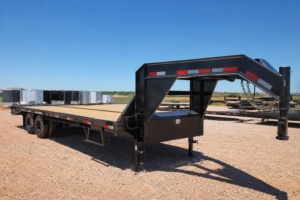
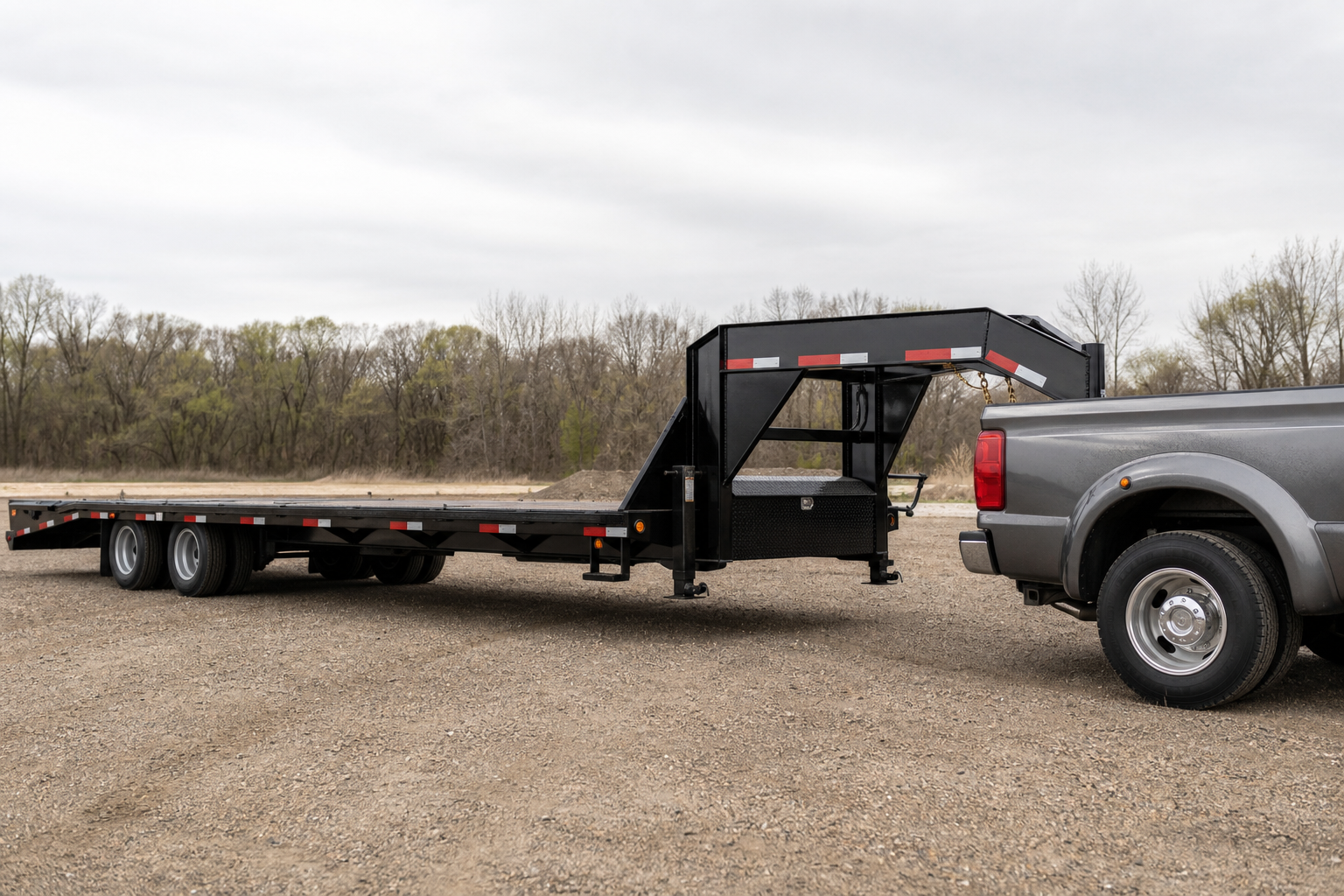
A gooseneck connects to a ball hitch mounted in your truck bed, directly over the rear axle.
The trailer’s coupler rides on a vertical “neck” that extends up and over the truck’s tailgate into the bed.
When to Choose a Bumper Pull
- Lighter loads (under 10,000 lbs) — For utility trailers, small dump trailers, enclosed cargo trailers, and small equipment trailers, bumper pull is perfectly adequate.
- No gooseneck hitch installed — If your truck doesn’t have a gooseneck ball in the bed, bumper pull works with any standard ball mount receiver.
- Half-ton trucks — Most half-ton trucks (F-150, Silverado 1500, RAM 1500) can safely tow bumper pull trailers within their rated capacity.
- Shorter trailers (under 24′) — Bumper pull works well for trailers up to about 24′. Longer than that and stability becomes a concern.
- Budget — Bumper pull trailers cost less than gooseneck equivalents because there’s less steel in the tongue/coupler assembly.
When to Choose a Gooseneck
- Heavy loads (over 10,000 lbs) — Gooseneck hitches handle significantly more tongue weight (usually 20-25% of trailer GVWR vs. 10-15% for bumper pull), meaning you can haul heavier total loads safely.
- Long trailers (24’+) — Gooseneck trailers from 24′ to 40′ are standard for commercial hauling and hotshot trucking.
- Better stability — Weight positioned over the rear axle instead of behind it reduces trailer sway dramatically, especially at highway speeds and in crosswinds.
- Tighter turning — Gooseneck trailers pivot closer to the truck, making them easier to back up and maneuver in tight spaces (loading docks, job sites, ranch gates).
- Commercial hauling — If you’re hauling for pay (hotshot trucking, equipment transport), gooseneck is the industry standard.
- Livestock hauling — Large livestock trailers (16’+) are almost exclusively gooseneck because of the weight and stability requirements.
Side-by-Side Comparison
Here’s how bumper pull and gooseneck compare on the factors that matter most:
- Max GVWR: Bumper pull typically maxes at 14,000-16,000 lbs. Gooseneck goes up to 25,000+ lbs.
- Trailer length: Bumper pull works for 8′-24′. Gooseneck handles 16′-40′.
- Towing stability: Gooseneck wins — significantly less sway at speed.
- Maneuverability: Gooseneck wins — tighter turning radius.
- Truck requirement: Bumper pull works with any truck. Gooseneck requires a gooseneck hitch in the bed (typically 3/4-ton or 1-ton trucks).
- Cost: Bumper pull is $500-$2,000 less for equivalent size/capacity.
- Bed access: Gooseneck coupler takes up space in the truck bed. Bumper pull leaves the bed completely free.
What About Fifth Wheel?
Fifth wheel hitches are similar to gooseneck but use a larger, flat coupling plate instead of a ball.
They’re primarily used for RVs and semi-trailers. For work trailers (dump, flatbed, equipment, livestock),
gooseneck is the standard.
The Bottom Line
Choose bumper pull if you’re hauling under 10,000 lbs, using a trailer under 24′,
or towing with a half-ton truck. It’s simpler, cheaper, and works great for the majority of homeowner
and light commercial needs.
Choose gooseneck if you’re hauling over 10,000 lbs, using a trailer over 24′,
hauling commercially, or prioritizing towing stability and maneuverability.
Not sure which is right for your situation? Stop by Trailer Place
in Wharton, TX or call (979) 532-1486. We carry both bumper pull and gooseneck versions of most trailer types
and can help you choose based on your truck, your load, and your budget.
Frequently Asked Questions
Which is better, Bumper Pull or Gooseneck Trailer?
Bumper Pull trailers typically offer superior build quality, better standard features, and stronger resale value compared to Gooseneck Trailer. We carry Bumper Pull at Trailer Place in Wharton, TX — call (979) 532-1486 to compare in person.
Are Bumper Pull trailers worth the money?
Yes. Bumper Pull trailers use higher-grade steel, better paint systems, and more robust components than many competitors. The upfront investment pays off with lower maintenance costs and longer lifespan.
Where can I buy Bumper Pull trailers in Texas?
Trailer Place in Wharton, TX is an authorized Bumper Pull dealer. We’re located at 2507 County Rd 231, Wharton, TX 77488. Call (979) 532-1486 or visit us to see our full inventory.
What warranty do Bumper Pull trailers come with?
Bumper Pull offers competitive manufacturer warranties, and Trailer Place provides additional dealer support. Contact us at (979) 532-1486 for current warranty details and financing options.