Cargo Trailer or Cargo Van? Here’s What Texas Mobile Business Owners Need to Know
If you run a mobile business — whether you’re a mobile detailer, caterer, handyman, landscaper, or contractor — you’ve probably asked yourself: should I invest in a cargo trailer or a cargo van? Both can haul tools, equipment, and supplies. But they’re not the same, and the wrong choice can cost you thousands of dollars over time.
At Trailer Place in Wharton, TX, we talk to mobile business owners every week. Here’s an honest breakdown to help you decide.
Cargo Capacity: Trailers Win on Raw Space
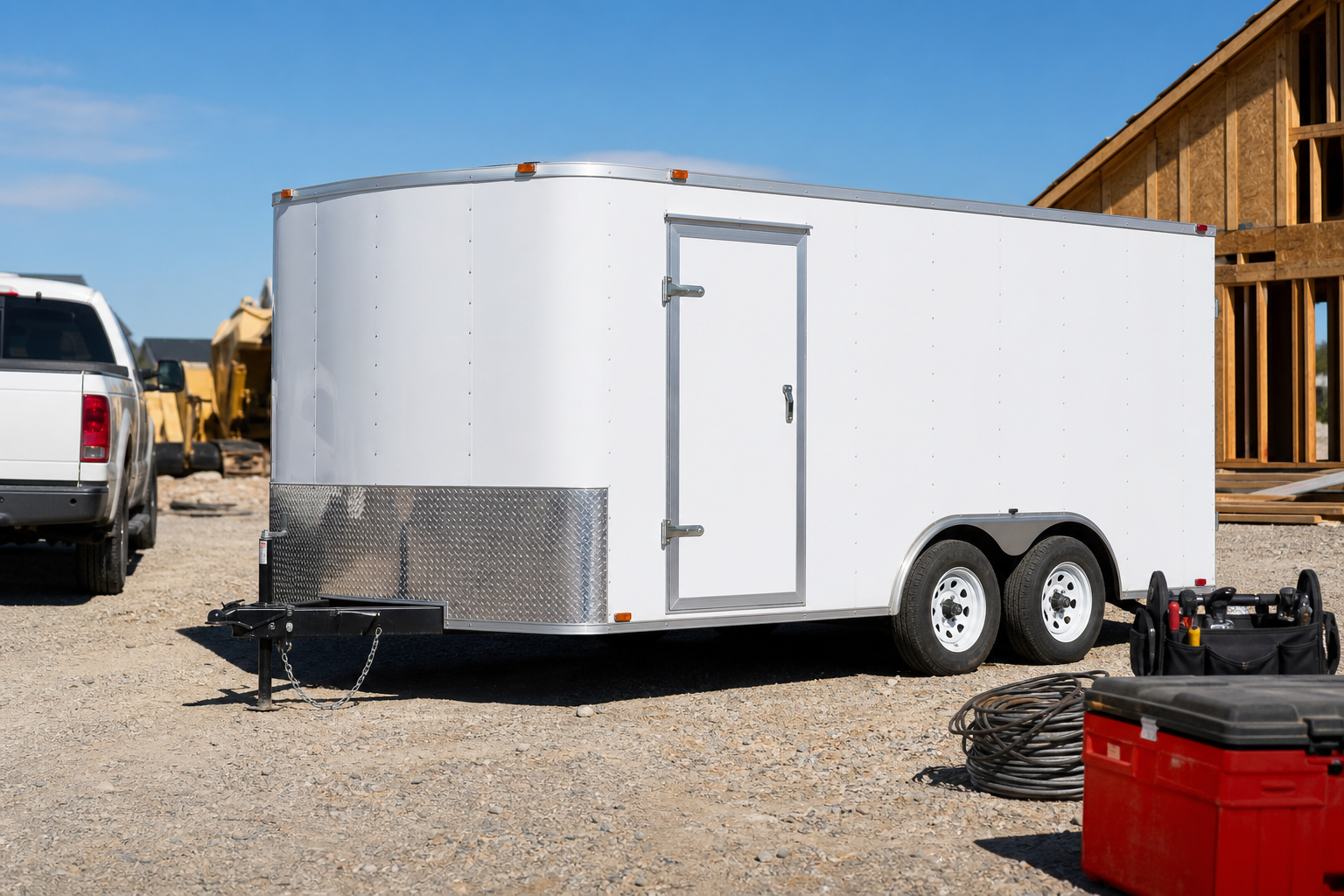
A standard cargo van (Ford Transit, Ram ProMaster, Mercedes Sprinter) gives you roughly 250 to 450 cubic feet of cargo space. A comparably priced enclosed cargo trailer — like the popular 8.5×20 or 8.5×24 models — offers 600 to 800+ cubic feet of usable space.
That means you can carry twice as much gear, tools, or inventory without a second trip. For mobile businesses that depend on volume — food vendors, mobile mechanics, event companies — this matters a lot.
Cost Comparison: Trailers Are Dramatically Cheaper
Here’s where the numbers get real:
- New cargo van: $45,000 to $65,000+ (Ford Transit, Ram ProMaster)
- New enclosed cargo trailer (8.5×20): $8,000 to $14,000 depending on brand and options
- Used cargo van in decent condition: $20,000 to $35,000
Even a fully loaded trailer from brands like Cargo Craft or Alcom will cost a fraction of a new van. That frees up capital for tools, inventory, or marketing. And if your trailer gets damaged or becomes too small, replacing it is far less painful than trading in a van.
Flexibility: Trailers Let You Separate Vehicle from Business
One underrated advantage of a cargo trailer: you can unhitch it at a job site or storage lot and drive your truck for other tasks. Your van is always a van — you can’t separate the cargo bay from the vehicle.
For businesses that park a “base of operations” overnight — food trailers, mobile salons, pop-up retail — a trailer is almost always the better setup. It also means if your tow vehicle has an issue, your business inventory stays safe and accessible.
When a Cargo Van Makes More Sense
We’re not here to oversell trailers. There are real situations where a van wins:
- You don’t own a vehicle with tow capacity — a trailer requires a truck or SUV rated to pull it safely
- You’re driving long urban routes — parking a trailer in downtown Houston or Austin is genuinely harder
- You want passengers + cargo — a cargo van (or sprinter conversion) lets you seat crew members
- Your business requires climate control — vans have factory HVAC that’s simpler to maintain
The Hybrid Approach: Tow a Trailer WITH Your Van
Here’s something worth knowing: many full-size cargo vans (Ford Transit, Ram ProMaster) have a factory tow rating of 5,000 to 7,500 lbs. That means you can haul a utility trailer or small enclosed trailer behind your van for extra capacity on big job days. Best of both worlds.
Bottom Line
For most Texas mobile business owners — especially contractors, landscapers, mobile food vendors, and tradespeople — a cargo trailer paired with a reliable tow vehicle delivers more space, lower upfront cost, and more operational flexibility than a cargo van alone.
We carry enclosed cargo trailers from top brands like Cargo Craft, Alcom, and Aluma in sizes from 6×10 all the way up to 8.5×28 — available in aluminum and steel construction with custom shelving, generator doors, and side RV doors. Financing is available, and we ship nationwide.
Come see us in Wharton, TX or give us a call at (979) 532-1486 to talk through what setup works best for your business. We’re family-owned and have been helping Texas entrepreneurs haul smarter for years.
Browse our enclosed cargo trailer inventory or check out our post on Best Trailers for Carnival and Fair Operators in Texas for more mobile business ideas.