A good strap or chain is only as strong as the anchor point it hooks to. Whether you haul equipment, a side-by-side or building materials, the D-rings and tie-down points on your trailer decide how safely your load stays put.
Common types of trailer anchor points
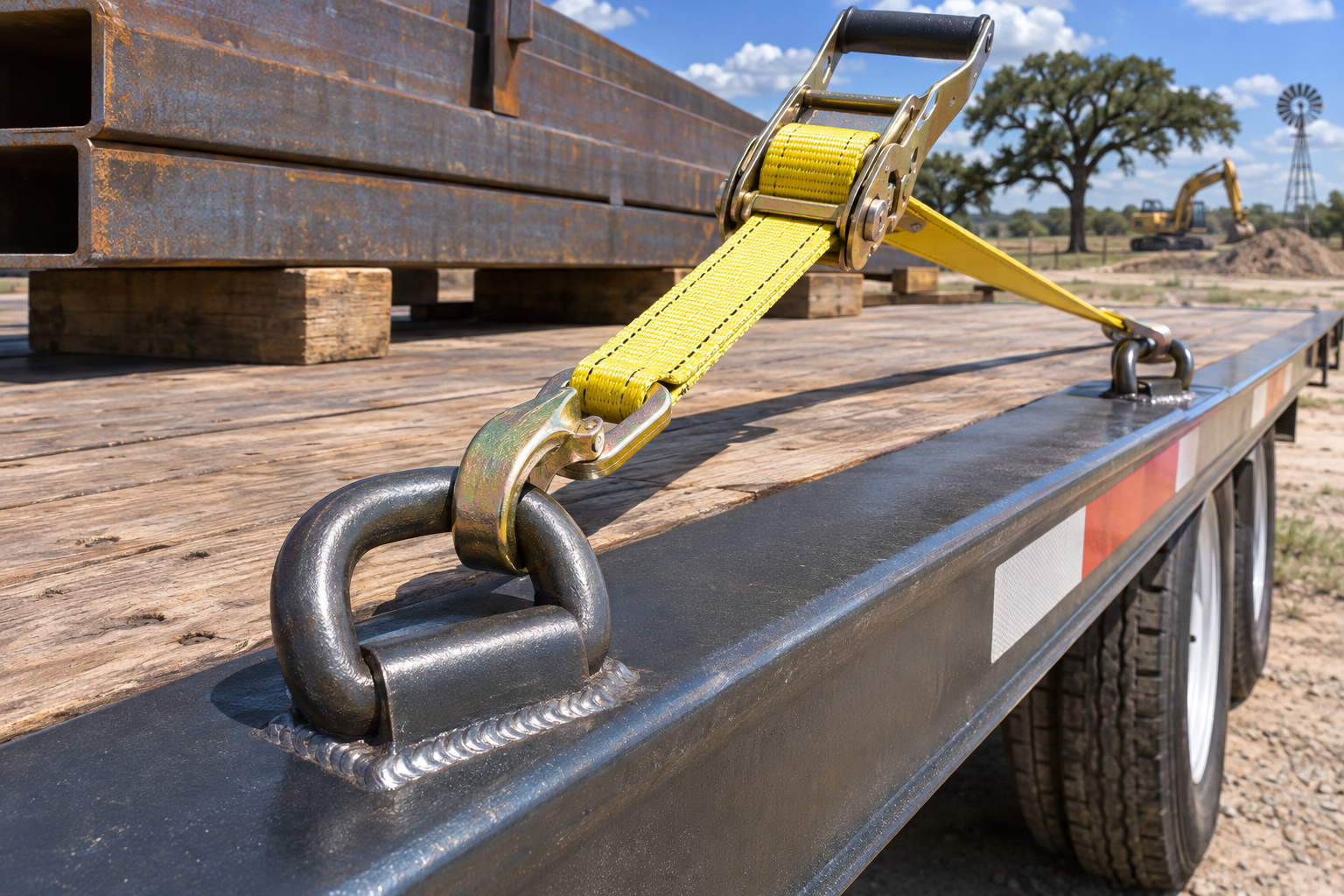
- Weld-on D-rings are welded to the frame or deck and are the strongest option for heavy equipment.
- Bolt-on or recessed D-rings sit flush in the deck so they do not snag cargo or tires.
- Stake pockets and rails let you hook straps around the frame. See our stake pockets guide.
- E-track rails in enclosed trailers hold adjustable tie-downs. See our E-track guide.
Read the working load limit
Every anchor has a working load limit, or WLL, and your straps and chains have their own. Your whole system is only as strong as the lowest rated piece. As a rule, the combined WLL of your tie-downs should be at least half the weight of the cargo. Our straps vs chains guide covers matching hardware to load.
Placement tips
- Spread anchors evenly so you can pull straps at opposing angles to the front, rear and sides.
- Keep strap angles roughly 30 to 45 degrees for the best holding force.
- Inspect welds and hardware for cracks, bends and rust before each haul.
- Never hook to a cargo ramp, fender or light bracket. Use real anchor points only.
Which trailers fit your load?
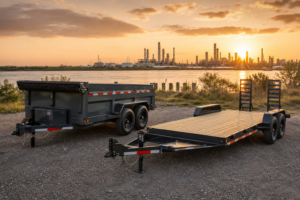
Heavy equipment haulers usually want weld-on D-rings on an equipment trailer. Hobby and landscape loads suit a utility trailer, and tools or furniture ride well in an enclosed cargo trailer with floor anchors. Ask us about adding extra D-rings to a new build.
Talk to Trailer Place
Trailer Place is a family-owned dealer in Wharton, TX (moving to Rosenberg mid-2026) serving Texas and Louisiana, with in-house STAR builds, financing and nationwide shipping. Call (979) 532-1486 and we will help you spec the right trailer.