When you’re shopping for a new trailer in Texas, you’ll hear a lot of numbers thrown around — GVWR, payload, tow capacity. But one rating that buyers often overlook is GCWR: Gross Combined Weight Rating. Understanding GCWR could be the difference between a safe, legal haul and a dangerous overload situation — or worse, a voided warranty.
What Is GCWR?
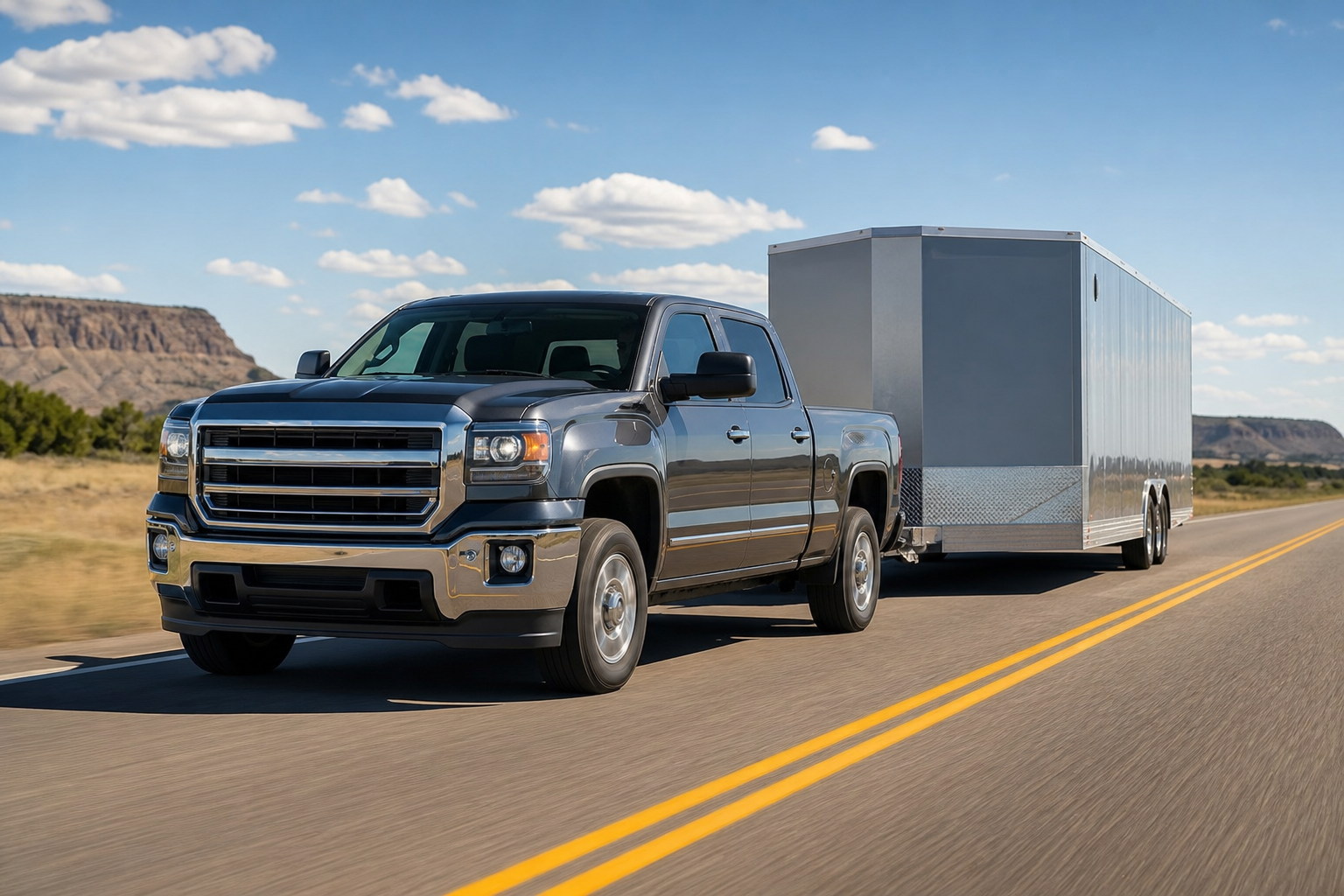
GCWR (Gross Combined Weight Rating) is the maximum allowable total weight of your fully loaded tow vehicle plus your fully loaded trailer. This number is set by your truck manufacturer and printed on the door jamb sticker or found in your owner’s manual.
For example, if your 2025 Ram 2500 has a GCWR of 26,000 lbs and it weighs 7,200 lbs fully loaded (with fuel, passengers, and gear), then you have 18,800 lbs left for your trailer — including everything on or in it.
GCWR vs. Tow Rating vs. GVWR — What’s the Difference?
These three numbers are related but different. Here’s a quick breakdown:
| Term | What It Means | Example |
|---|---|---|
| GCWR | Max total weight of truck + trailer combined | 26,000 lbs |
| Tow Rating | Max trailer weight the truck can pull (assumes a lightly loaded truck) | 19,780 lbs |
| GVWR | Max allowable weight of the trailer itself (frame + cargo) | 14,000 lbs |
| Payload | Max weight you can put in/on the truck itself | 3,160 lbs |
The tow rating is often the number people look at — but it’s calculated under ideal conditions with a lightly loaded truck. The GCWR is the hard ceiling that accounts for reality: a loaded cab, tools in the bed, passengers, and a heavy trailer.
Why GCWR Matters More Than Just Tow Rating
Here’s where buyers get into trouble. A truck might have a 20,000 lb tow rating, but if you load the truck cab with 4 passengers plus tools, and throw gear in the bed, you may be 2,000 lbs into your GCWR before the trailer is even hitched.
Common GCWR mistakes Texas trailer buyers make:
- Buying a trailer based on tow rating alone without checking GCWR
- Ignoring the weight of payload in the truck (tools, fuel, passengers)
- Assuming max trailer weight = safe trailer weight
- Not accounting for a loaded trailer (cargo, livestock, equipment) vs. its empty weight
When you exceed GCWR, you risk brake fade (your truck’s brakes are rated for a specific combined weight), transmission and engine overheating, tire failures, and voiding your truck’s powertrain warranty. In Texas, overweight rigs can also trigger DOT fines on commercial routes.
GCWR by Common Truck Models (2025-2026)
| Truck | Engine/Config | GCWR | Tow Rating |
|---|---|---|---|
| Ford F-250 Super Duty | 6.7L Power Stroke Diesel | 27,500 lbs | 20,000 lbs |
| Ram 2500 | 6.7L Cummins Diesel | 26,000 lbs | 19,780 lbs |
| Chevy Silverado 2500HD | 6.6L Duramax Diesel | 27,000 lbs | 18,500 lbs |
| Ford F-350 (SRW) | 6.7L Power Stroke Diesel | 35,000 lbs | 26,500 lbs |
| Ram 3500 (DRW) | 6.7L Cummins Diesel | 43,000 lbs | 37,090 lbs |
| Ford F-150 | 3.5L EcoBoost | 14,000 lbs | 13,000 lbs |
| Chevy Silverado 1500 | 6.2L V8 | 13,000 lbs | 11,000 lbs |
Note: GCWR and tow ratings vary by cab/bed configuration, axle ratio, and equipment packages. Always check your specific truck’s door jamb sticker or owner’s manual.
How to Calculate How Much Trailer You Can Actually Tow
Here’s the quick math to figure out what trailer weight is safe for your specific setup:
- Find your truck’s GCWR (door jamb sticker or owner’s manual)
- Weigh your truck fully loaded: fuel + passengers + tools/gear in the bed
- Subtract loaded truck weight from GCWR — that’s your remaining capacity for the trailer
- Compare that number to the trailer’s GVWR (not empty weight — assume a loaded trailer)
- If GVWR is under your remaining capacity, you’re in the safe zone
Example: F-350 GCWR = 35,000 lbs. Loaded truck weight = 8,500 lbs. Remaining capacity = 26,500 lbs. You could safely pull a gooseneck trailer or heavy equipment trailer with a GVWR up to 26,500 lbs — but check the individual trailer’s specs first.
Which Trailers from Trailer Place Match Common GCWR Limits?
Here’s how popular trailer types from our lot match up to truck GCWR ranges:
| Trailer Type | Typical GVWR Range | Recommended Tow Vehicle |
|---|---|---|
| Utility Trailers (7×14-7×16) | 7,000-10,000 lbs | F-150, Silverado 1500, Ram 1500 |
| Dump Trailers (12-16 ft) | 10,000-24,000 lbs | F-250/2500 through F-350/3500 |
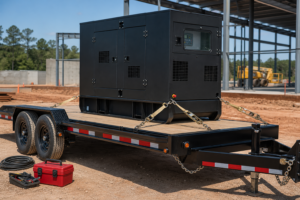
| Equipment Trailers | 12,000-20,000 lbs | F-250/2500 or heavier |
| Gooseneck Trailers | 20,000-30,000 lbs+ | F-350/3500 dually required |
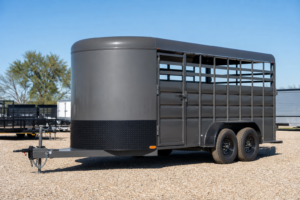
| Livestock Trailers | 7,000-25,000 lbs | Depends on size; GN needs 1-ton |
| Flatbed Trailers | 7,000-20,000 lbs | 3/4-ton to 1-ton |
GCWR and Texas DOT Regulations
Texas has specific weight limits for vehicles operating on public roads. While GCWR is a manufacturer rating (not a legal limit), exceeding it often correlates with exceeding Texas legal weight limits:
- Texas gross weight limit on standard roads: 80,000 lbs (for commercial trucks)
- Single axle limit: 20,000 lbs; tandem axle: 34,000 lbs
- Vehicles over 26,001 lbs combined require a CDL if operated commercially
- Private, non-commercial towing is exempt from CDL requirements regardless of weight in Texas
For a full breakdown of Texas towing laws, read our guide: Do I Need a CDL to Pull a Trailer in Texas?
GCWR Questions We Get at Trailer Place
Can I tow a trailer that’s heavier than my tow rating if it’s under GCWR?
No. The tow rating is a hard limit set by the manufacturer. Both the tow rating AND GCWR must be respected — whichever limit you hit first is the binding constraint.
Does tongue weight affect GCWR?
Yes. Tongue weight (the downward force the trailer hitch puts on the truck) counts toward your truck’s payload capacity. Heavy tongue weight eats into payload room fast, especially on half-ton trucks. Keep tongue weight at 10-15% of total trailer weight. A weight distribution hitch helps redistribute the load across all four truck wheels.
Where do I find my truck’s GCWR?
Check the sticker inside the driver’s side door jamb, your owner’s manual, or the manufacturer’s towing guide (usually available on the brand’s website). The numbers vary by cab style, bed length, engine, axle ratio, and options package — so look up your exact configuration.
Ready to Find the Right Trailer for Your Truck?
At Trailer Place in Wharton, TX (moving to Rosenberg mid-2026), our team helps buyers match the right trailer to their specific truck and use case every day. Whether you’re hauling cattle and horses, moving equipment to a job site, or pulling a dump trailer for your landscaping business, we’ll make sure you’re not leaving with something your truck can’t safely handle.
We carry Diamond C, Iron Bull, Kaufman, Calico, Aluma, and more — with financing available for all credit types.
Call us at (979) 532-1486 or stop by the lot. We’ll help you match your tow vehicle to the right trailer and make sure you stay safe, legal, and well under GCWR on every haul.