Most trailer accidents that make the news start at the hitch. A coupler that was never latched, safety chains dragging on the pavement, or a breakaway battery that died two summers ago can turn a routine haul down US-59 into a disaster. At Trailer Place in Wharton, TX, we walk every buyer through a proper hookup before they leave the lot. Here is the same checklist in writing.
Match the Coupler, Ball, and Hitch Ratings
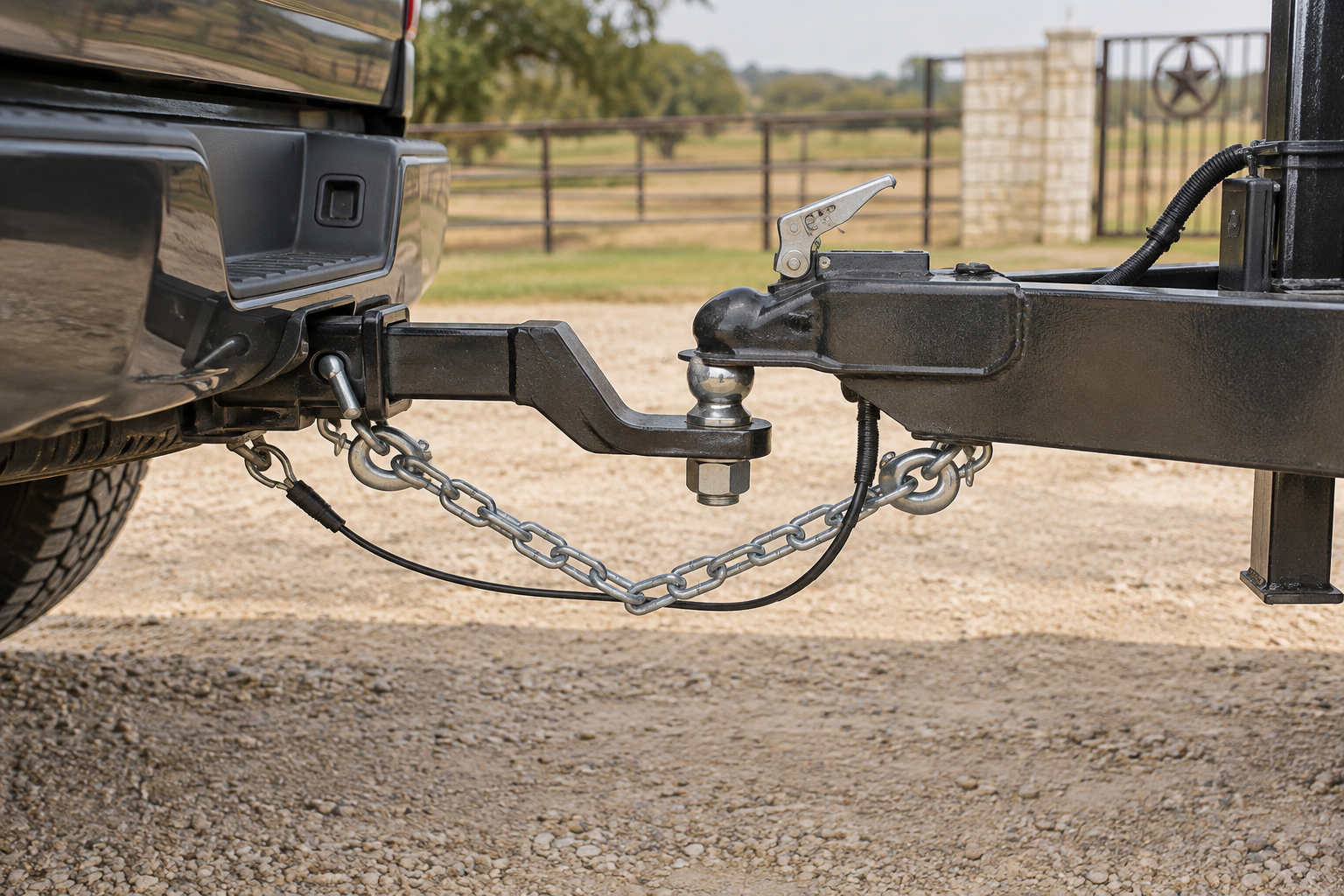
Your coupler size is stamped on the trailer tongue. Common sizes are 2 inch (light utility trailers up to about 3,500 lbs GVWR), 2-5/16 inch (most tandem-axle utility, car hauler, and dump trailers from 7,000 to 14,000 lbs GVWR), and gooseneck couplers for heavier loads. A 2 inch ball in a 2-5/16 inch coupler will seem to latch and then pop off at the first pothole. Your setup is only as strong as its lowest-rated part: ball, ball mount, receiver, and truck. If you are unsure what your numbers mean, read our GVWR, payload, and tongue weight guide.
How to Hook Up Safety Chains the Right Way
- Cross them under the tongue. Crossing creates a cradle that catches the tongue if the coupler lets go, so it does not dig into the road.
- Leave just enough slack to turn. Chains should not drag, but they must allow a full turn without binding.
- Use rated hooks. Clevis or latching hooks rated at or above the trailer GVWR. Never wrap chains around the ball mount.
- Attach to the truck frame loops, not the bumper or the ball shank.
Texas requires safety chains on trailers that are not connected with a fifth wheel or gooseneck with a secure kingpin lock, and chains must be strong enough to control the trailer if the hitch fails. Gooseneck trailers still need chains attached to the truck bed anchors. See our gooseneck hitch setup guide for bed hardware.
Test Your Breakaway Kit Every Trip
Any trailer with electric brakes carries a breakaway kit: a small battery plus a switch with a pull pin on a cable. If the trailer separates, the pin pulls and the brakes lock. Clip the cable to the truck separately from the chains, keep enough slack so it will not pull in a turn, and test it by pulling the pin and trying to roll forward slowly. Charge or replace the battery if the brakes feel weak. For more on brake systems, compare electric vs surge brakes.
Quick Pre-Trip Hitch Checklist
- Coupler latched and pinned or locked
- Chains crossed, hooks closed, no dragging
- Breakaway cable attached to truck, battery charged
- Wiring plugged in and lights tested
- Tongue jack fully raised
Trailers Built With Quality Hitch Hardware
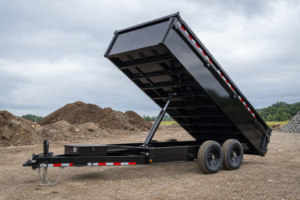
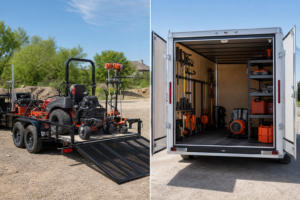
Every Diamond C, Iron Bull, and in-house built STAR trailer on our lot ships with properly rated couplers, safety chains, and breakaway kits on braked models. Browse utility trailers or dump trailers, and ask about financing and nationwide shipping.
Family-owned Trailer Place serves Texas and Louisiana from Wharton, TX, moving to Rosenberg in mid-2026. Call (979) 532-1486 and we will help you set up your hitch the right way.