Power line and utility crews work some of the hardest jobs in Texas — out before sunrise, hauling transformers, cable reels, generators, and hand tools across long stretches of highway to keep the lights on for millions of residents. Whether you’re running a crew for an electric co-op, a private utility contractor, or a municipal public works department, the trailer you pull directly affects how efficiently your team operates on the job site.
At Trailer Place in Wharton, TX — serving Houston, San Antonio, and all of South and Central Texas — we work with utility contractors, co-op fleet managers, and independent linemen every season. Here’s what we’ve seen work best in 2026.
What Do Power Line and Utility Crews Actually Haul?
Before choosing a trailer, it helps to think through the actual cargo your crew moves every day:
- Cable and wire reels (heavy, often 1,500-5,000 lbs per reel)
- Transformers and switching gear (can exceed 10,000 lbs)
- Bucket truck support equipment and parts
- Generators (portable units from 500-30,000 watts)
- Trenching machines, cable plows, and compact excavators
- Tool and PPE storage (enclosed or compartmentalized)
- Spill kits, safety equipment, and OSHA compliance gear
That variety typically means crews need more than one trailer type — or a flexible setup that can adapt to different job requirements throughout the week.
Top Trailer Types for Utility and Power Line Work
1. Heavy Equipment Trailers (Most Common Choice)
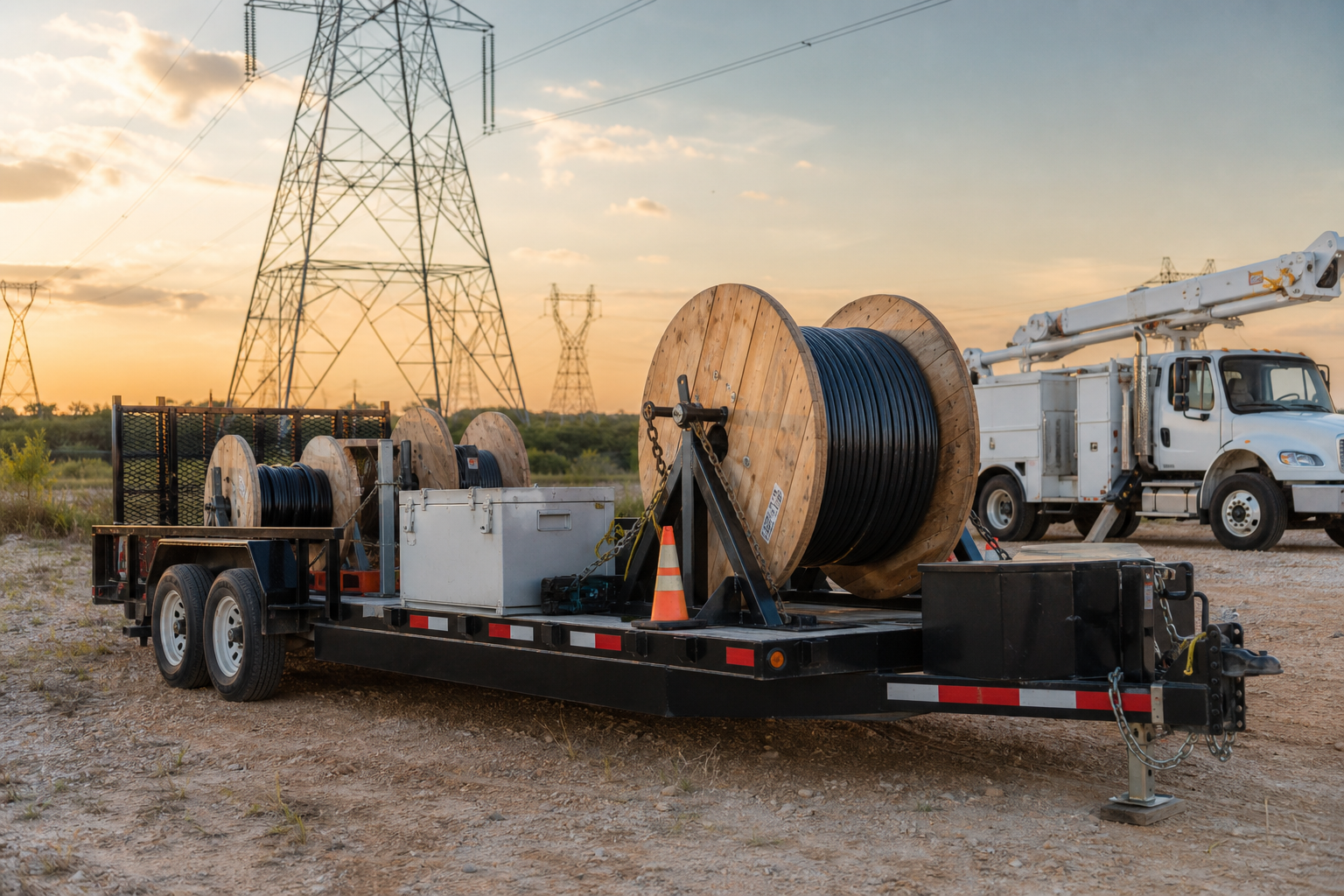
When your crew moves a mini-excavator, cable plow, or directional drill rig, you need a trailer rated for the weight. Equipment trailers in the 12,000-20,000 lb GVWR range are the workhorses of utility fleets.
Popular specs for power line work:
- 20-25 ft deck length — handles most compact equipment plus reel transport frames
- 14,000-20,000 lb GVWR — covers everything from trenchers to small excavators
- Dovetail or hydraulic dovetail — drive-on access for tracked machines
- Pipe spools and rub rails — useful for containing wire reels during transport
- Dual brake axles — mandatory for this weight class in Texas
Top models we stock: Iron Bull Equipment Trailer (20K GVWR), Diamond C LPT and MPS series. The Iron Bull 20K bumper pull is particularly popular with co-op crews because it handles transformer skids without needing a gooseneck truck.
2. Gooseneck Equipment Trailers (for Heavier Payloads)
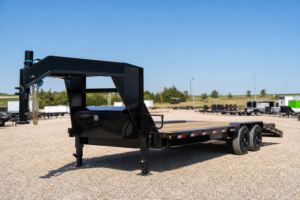
Electrical utilities and telecom contractors who regularly haul full-size excavators, cable reel trailers, or multiple equipment units often step up to gooseneck trailers. A gooseneck shifts tongue weight into the truck bed rather than the hitch receiver, allowing for much higher payload capacity — typically 20,000-30,000 lbs on a tandem dual-wheel setup.
Models worth considering: Kaufman GN equipment trailers and Diamond C GN series. For co-ops running Class 8 service trucks, a 30K gooseneck flatbed with pipe railing keeps heavy wire reels and transformer banks secure.
3. Utility Trailers for Tools and Crew Gear
Utility trailers in the 6×12 to 7×16 range handle the day-to-day hauls that don’t require a full equipment trailer. Power line foremen often run a dedicated utility trailer for hand tools, safety equipment, portable generators, water coolers, and OSHA compliance materials.
A standard 83″x16′ tandem axle utility trailer with 7,000 lb GVWR, side rails, and a mesh deck runs about $2,200-$3,800 and handles years of daily use with basic maintenance. Iron Bull and Aluma aluminum utility trailers are both popular with utility companies that need something lightweight behind a service van.
4. Enclosed Cargo Trailers for Mobile Tool Storage
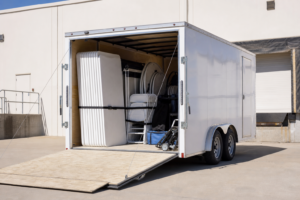
More utility crews are shifting to enclosed cargo trailers as a secure, weatherproof tool and equipment storage solution. An 8.5×24 or 8.5×28 enclosed trailer with interior shelving, electrical hookups, and a cargo door becomes a mobile job site storage unit — much cheaper than leasing a site office or portable storage container.
Useful features for utility applications:
- Side door with ramp or step
- Interior wall blocking for mounting tool racks
- Exterior LED lighting package
- 110V shore power hookup for battery chargers
- Rear ramp door for loading small equipment
Cargo Craft and Alcom both make 8.5-wide V-nose enclosed trailers with upgrade packages well-suited for utility fleets. Prices range from $8,500 for a basic 7×16 to $18,000+ for a fully upgraded 8.5×28 with interior buildout.
5. Flatbed Trailers for Versatile Hauling
Flatbed trailers bridge the gap between utility trailers and full equipment trailers. A 20-ft bumper pull flatbed at 14,000 lb GVWR handles everything from lumber and conduit to small generators and portable light towers — the kind of versatile hauling utility crews do constantly during storm restoration events.
Diamond C’s LPX low-profile flatbed and Iron Bull’s 14K bumper pull flatbed are popular in utility fleets because the low deck height makes hand-loading cable reels and tool boxes easier on the crew’s backs.
Trailer Sizing Guide by Crew Type
Use this quick reference to match your crew’s needs to the right trailer setup:
| Crew Type | Recommended Trailer | Est. Price Range |
|---|---|---|
| Independent lineman / solo contractor | 7×16 tandem utility + 7×14 enclosed | $3,500-$8,000 |
| Small utility crew (3-5 people) | 16-20 ft equipment trailer (10K-14K GVWR) | $5,500-$9,500 |
| Electric co-op fleet unit | 20-22 ft equipment trailer (14K-20K GVWR) | $9,500-$16,000 |
| Telecom / cable installation crew | 8.5×24 enclosed + utility combo | $12,000-$20,000 |
| Transmission line contractor | Gooseneck equipment trailer (25K-30K GVWR) | $16,000-$28,000 |
Key Features Worth Paying For
- Electric brakes on all axles — required for trailers over 4,500 lbs GVWR in Texas; non-negotiable for equipment loads
- Heavy-gauge steel or galvanized frame — corrosion resistance matters when trailers sit outside in South Texas humidity year-round
- LED lighting throughout — brighter, longer-lasting, and less likely to fail in the field during night work
- Spare tire mount — utility crews can’t afford a flat shutting down a job
- Adjustable pipe spools or chain pockets — wire reel containment and equipment securing
- Heavy-duty ramps (if equipment trailer) — 60″ wide ramps and proper ramp angle for tracked machines
Texas Registration and CDL Notes for Utility Trailers
Utility companies operating trailers in Texas need to know a few legal thresholds:
- Trailers over 4,500 lbs GVWR require electric brakes on all axles in Texas
- Combined vehicle weight (truck + trailer + load) over 26,001 lbs requires a CDL — a gooseneck loaded with a large excavator can easily hit this threshold
- Oversize loads (over 8.5 ft wide or 14 ft tall) require an oversize permit from TxDOT
- Commercial fleet trailers may require annual TxDOT inspection and apportioned registration
See our full guide: Do I Need a CDL to Pull a Trailer in Texas? and Texas Trailer Registration and Title Guide.
Fleet Purchasing and Financing
For co-ops and utility contractors purchasing multiple trailers, Trailer Place offers fleet pricing and financing through our network of lenders. Equipment trailers and enclosed units used for business purposes often qualify for Section 179 deductions — buying before year-end can result in significant tax savings.
Read more: Trailer Financing Guide for Texas Buyers (2026)
Talk to a Trailer Specialist
Power line and utility work puts real demands on your equipment. If you’re not sure which trailer setup best fits your fleet’s workload, call Trailer Place at (979) 532-1486. We’re based in Wharton, TX and serve crews across Houston, the Gulf Coast, South Texas, and surrounding areas. We can walk you through specific models, weight ratings, and custom configurations — and we offer financing with approvals in as little as 24 hours.
Browse our in-stock inventory at trailerplace.com or visit us in Wharton. We ship nationwide and can help you spec the right trailer for the job your crew runs every day.