Flatbed vs. Equipment Trailer: Which One Do You Actually Need?
Shopping for a heavy-duty work trailer and not sure whether you need a flatbed or an equipment trailer? You’re not alone. These two trailer types look similar at first glance, but they’re built for different jobs. Pick the wrong one and you’ll either overpay or end up with a trailer that can’t handle what you’re loading onto it.
At Trailer Place in Wharton, TX, we help Texas contractors, farmers, landscapers, and business owners find the right trailer every day. Here’s how flatbeds and equipment trailers actually differ — and how to choose.
What Is a Flatbed Trailer?
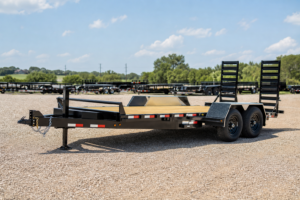
A flatbed trailer is a general-purpose hauler with a flat, open deck and no sides or walls. Flatbeds are versatile — they can haul lumber, pipe, sheet metal, pallets, ATVs, small machines, and more. They’re lightweight by design, which maximizes your payload capacity.
Common flatbed specs:
- GVWR range: 7,000 lbs to 14,000 lbs
- Deck lengths: 16 ft to 40 ft
- Deck height: Lower profile (usually 20-22 inches)
- Axle count: Single or tandem
- Coupler options: Bumper pull or gooseneck
Popular flatbed models at Trailer Place include the Diamond C LPX and MSO series, and the Iron Bull FBX and GN series. These are steel-built, work-ready trailers designed for serious Texas jobs.
What Is an Equipment Trailer?
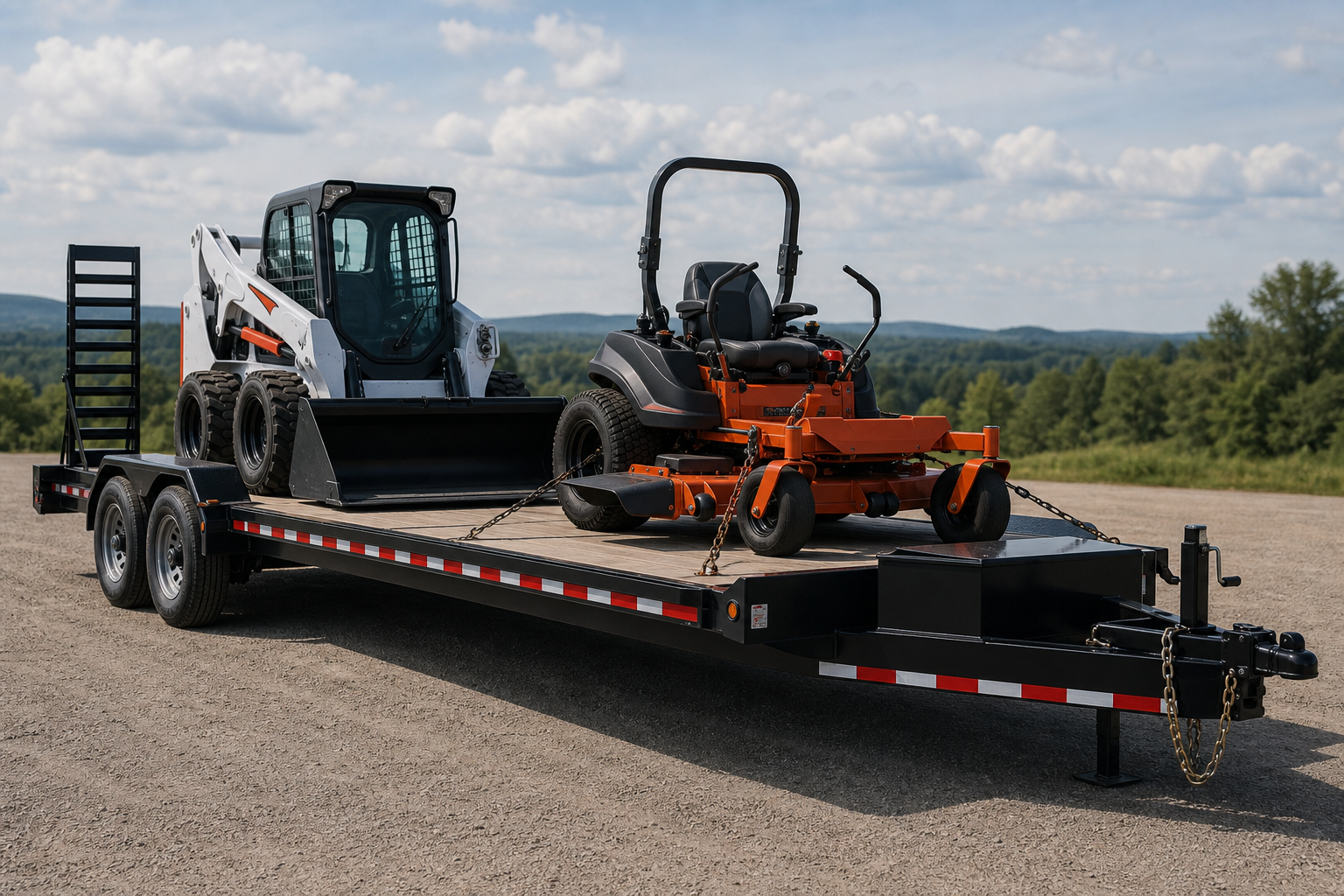
An equipment trailer (sometimes called a heavy equipment trailer or low-profile equipment trailer) is purpose-built for hauling heavy machinery — excavators, skid steers, tractors, forklifts, and large construction equipment. Equipment trailers have beefier frames, higher GVWR ratings, and lower deck heights to make loading easier and keep loads stable under heavier weight.
Common equipment trailer specs:
- GVWR range: 14,000 lbs to 25,900 lbs (some go higher)
- Deck lengths: 20 ft to 40 ft
- Deck height: Very low (14-18 inches at the rear for easy drive-on loading)
- Axle count: Tandem or triple axle
- Ramps: Heavy-duty fold-over or slide-in ramps standard
- Coupler: Almost always gooseneck for serious heavy loads
At Trailer Place, our equipment trailer inventory includes Diamond C, Iron Bull, and Texas Pride models rated for 20,000+ lbs GVWR. These are built for the construction crews, pipeline contractors, and ag operations that need to move serious iron.
Key Differences at a Glance
Here’s how the two trailer types compare side by side:
| Feature | Flatbed Trailer | Equipment Trailer |
|---|---|---|
| Primary Use | Lumber, pipe, pallets, light equipment | Skid steers, excavators, tractors, heavy machinery |
| GVWR Range | 7,000 – 14,000 lbs | 14,000 – 25,900+ lbs |
| Deck Height | 20-22 inches (standard) | 14-18 inches (very low for drive-on) |
| Ramps | Optional / lighter duty | Heavy-duty, often fold-over standard |
| Frame | Lighter I-beam or channel | Heavy-duty I-beam (6″ to 12″) |
| Tow Vehicle | 3/4-ton to 1-ton truck | 1-ton or heavier (F-350, Ram 3500+) |
| Price Range | $4,000 – $10,000 | $8,000 – $20,000+ |
Which One Should You Buy?
Buy a Flatbed Trailer If…
- You’re hauling building materials, fencing supplies, pipe, or landscaping equipment
- Your heaviest load is under 10,000 lbs
- You need versatility — different loads every week
- You’re pulling with a 3/4-ton or 1-ton pickup truck
- You want a lower entry price point
A well-built flatbed like the Diamond C LPX (GVWR up to 14,000 lbs, 20-ft or 25-ft deck) handles the vast majority of Texas contractor and farm jobs at a fraction of the cost of a full equipment trailer.
Buy an Equipment Trailer If…
- You’re moving skid steers, mini excavators, tractors, or track loaders
- Your loads regularly exceed 12,000-14,000 lbs
- You need a very low deck height for easy drive-on loading of machinery
- You’re doing construction, oilfield, or pipeline work requiring heavy iron transport
- You need a CDL-exempt 25,900 lb GVWR gooseneck rated for production hauling
For heavy work, an equipment trailer is the right investment. Trying to overload a flatbed rated for 14,000 lbs with a 17,000-lb excavator will damage the trailer and could cause a dangerous blowout on the highway.
Do You Need a CDL?
In Texas, you do not need a commercial driver’s license (CDL) to pull most trailers with a GVWR under 26,001 lbs — which covers the majority of flatbed and equipment trailers we sell. However, if your combined vehicle + trailer GVWR exceeds 26,000 lbs and you’re hauling for commercial purposes, check with the Texas DPS for the latest rules. Our staff can help you understand what your specific setup requires.
For a detailed breakdown, check out our guide: Do I Need a CDL to Pull a Trailer in Texas?
Towing Requirements
Before you buy either trailer type, make sure your truck can handle the load. A light-duty flatbed rated for 7,000 lbs GVWR can be pulled by a half-ton truck, but a 20,000-lb equipment trailer requires a properly equipped 1-ton truck or larger.
- F-250 / Ram 2500 / Sierra 2500: Good for flatbeds up to ~14,000 lbs GVWR
- F-350 / Ram 3500 / Sierra 3500: Capable of handling most equipment trailers up to ~20,000+ lbs
- F-450 / Ram 4500 and larger: Best match for the heaviest 25,900 lb gooseneck equipment trailers
Check our complete Trailer Towing Guide for truck-by-truck capacity details.
Shop Flatbeds and Equipment Trailers at Trailer Place
Trailer Place is a family-owned trailer dealership serving Wharton, TX and all of Texas and Louisiana. We carry flatbed trailers and equipment trailers from Diamond C, Iron Bull, Texas Pride, and other top brands — all with in-stock inventory and competitive pricing.
We offer financing for all credit types, so don’t let a tough credit history hold you back. We also offer nationwide shipping if you’re not local.
Ready to find the right trailer for your work? Call us at (979) 532-1486 or stop by our lot in Wharton, TX. Our team will help you match the right trailer to your load, your truck, and your budget.