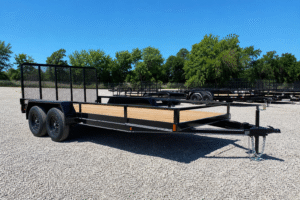

If you run a construction company, ranch, landscaping business, or hotshot trucking operation in Texas, a new trailer is not just a tool. It can also be a significant tax break. The Section 179 deduction lets qualifying businesses write off the full purchase price of equipment, including trailers, in the year they are put into service instead of depreciating the cost over several years. Here is what Texas business owners need to know before buying a trailer in 2026.
What Is the Section 179 Deduction?
Section 179 of the IRS tax code allows businesses to deduct the full purchase price of qualifying equipment and vehicles bought or financed during the tax year, up to an annual limit set by the IRS (typically well over $1 million for 2026, subject to a total equipment spending cap). Trailers used for business purposes, including dump trailers, enclosed cargo trailers, flatbed trailers, and livestock trailers, generally qualify as long as they are used more than 50 percent of the time for business.
Which Trailers Typically Qualify
- Dump trailers used to haul debris, gravel, or dirt for a construction or landscaping business
- Enclosed cargo trailers used to transport tools, equipment, or inventory
- Flatbed and equipment trailers used to move skid steers, tractors, or heavy machinery
- Livestock and stock trailers used on a working ranch or breeding operation
- Car hauler trailers used by a dealer, flipper, or transport business
A trailer used purely for personal recreation, like hauling a family ATV on weekends, will not qualify. Keep good records of business use, and always confirm your specific situation with a licensed tax professional before you file, since rules and limits can change from year to year.
Why Financing a Trailer Can Still Get You the Full Deduction
One of the most overlooked parts of Section 179 is that you do not need to pay cash upfront to claim the deduction. If you finance a trailer through Trailer Place and it is placed into service before December 31, you may be able to deduct the full purchase price for that tax year, even though you are still making payments. That means a $20,000 Diamond C dump trailer or a $15,000 Iron Bull equipment trailer purchased on financing terms could reduce your taxable income by the full amount, while your actual cash outlay is spread out over monthly payments. This is one of the reasons Texas business owners often time equipment purchases for late in the year, though buying earlier gives you more use out of the trailer in the meantime.
Popular Trailers Texas Business Owners Are Financing in 2026
At Trailer Place in Wharton, TX, we see contractors, ranchers, and small business owners across Texas and Louisiana take advantage of Section 179 every year. Some of the most popular business-use trailers right now include:
- Diamond C dump and equipment trailers for contractors and landscapers
- Iron Bull deckover and gooseneck trailers for heavy equipment haulers
- Calico livestock trailers for cattle operations and breeders
- In-house STAR brand galvanized cattle trailers built for Texas and Louisiana ranch work
Every one of these trailers can be spec’d with the right GVWR, axle configuration, and deck length for your operation. If you are still deciding on the right setup, our guide on single axle vs tandem axle trailers and our dovetail length comparison can help you match the trailer to the job before you buy.
How to Get Started
Before year-end, talk with your accountant about how much equipment spending makes sense for your business, then come see us at Trailer Place in Wharton, TX (moving to Rosenberg, TX in mid-2026). We carry Diamond C, Iron Bull, Calico, Texas Pride, Aluma, Kaufman, W-W, and our own STAR brand trailers, and our team can walk you through financing options designed to help you place a trailer into service before the tax year closes. We ship nationwide and serve customers across Texas and Louisiana.
Call us today at (979) 532-1486 to talk through your business trailer needs and financing options, or check out our trailer financing guide for more on getting approved. This article is for general information only and is not tax advice; please consult a qualified tax professional about your specific situation.