When it comes to hauling heavy equipment, the loading process can make or break your workday. Two of the most popular options at Trailer Place are tilt trailers and ramp trailers — and buyers ask us constantly: which one is better? The honest answer is: it depends on what you’re loading.
This guide breaks down the real-world differences between tilt deck trailers and traditional ramp-style trailers so you can pick the right one for your operation.
What Is a Tilt Trailer?
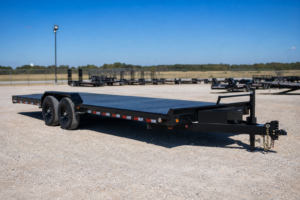
A tilt trailer (also called a tilt deck trailer) has a deck that physically pivots at the rear. When you release the locking mechanism, the front of the deck rises and the back drops to the ground — creating a loading ramp without any separate ramp pieces. You drive or roll equipment up, then tilt the deck back to level and lock it in.
Tilt trailers are extremely popular for equipment dealers, landscapers, and contractors who load and unload multiple times a day. Common GVWR ratings run from 7,000 lbs to 14,000 lbs for bumper pull models, with gooseneck tilt trailers reaching 20,000+ lbs.
What Is a Ramp Trailer?
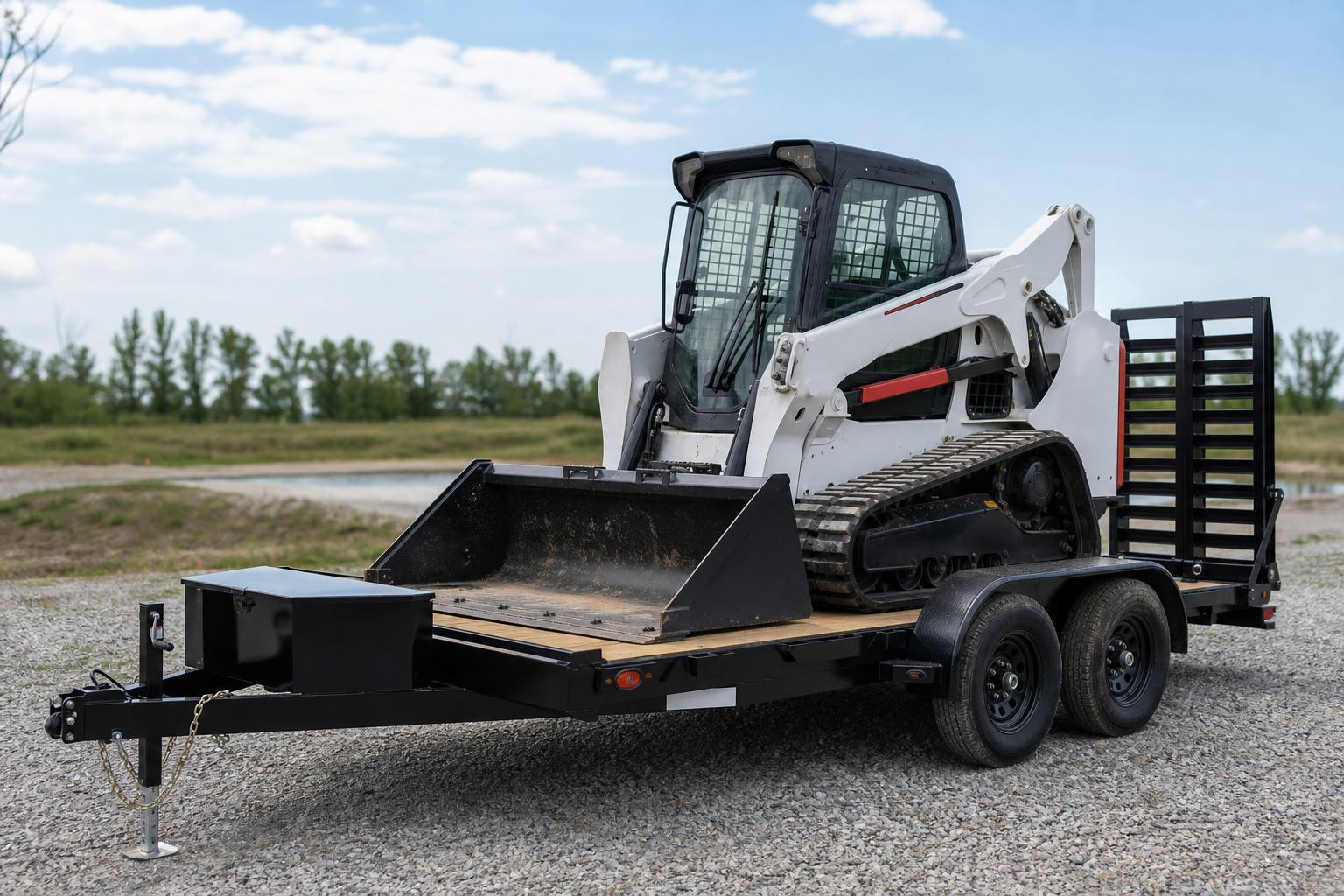
A ramp trailer (standard equipment trailer) has a fixed flat deck with fold-down or slide-out ramps at the rear. You unfold the ramps, drive equipment up, then fold the ramps back for transport. Equipment trailers in this style are the workhorses of construction, agriculture, and oilfield industries.
Ramp trailers typically offer higher payload capacity at the same price point, since there’s no tilt mechanism adding cost and weight. GVWR options range from 7,000 lbs to 25,000+ lbs depending on axle configuration and build.
Tilt Trailer vs Ramp Trailer: Side-by-Side Comparison
| Feature | Tilt Trailer | Ramp Trailer |
|---|---|---|
| Loading Method | Deck tilts to ground | Fold-down or slide-out ramps |
| Ease of Loading | Excellent (ground-level entry) | Good (ramp angle varies) |
| Low-Clearance Equipment | Best (zero ramp lip) | Good (depends on ramp design) |
| Payload Capacity | Moderate (mechanism adds weight) | Higher per dollar |
| Price | Higher (more hardware) | Lower at same GVWR |
| Maintenance | More (pivot, lock hardware) | Less (simpler design) |
| Deck Length | Usually 16-22 ft | 16-40 ft (more options) |
| Best For | Skid steers, mowers, UTVs | Excavators, bulldozers, heavy equipment |
When to Choose a Tilt Trailer
A tilt deck trailer is the right call when:
- You load and unload multiple times daily. The tilt mechanism is faster than deploying ramps — especially when you’re solo. No ramps to manhandle, no chains to mess with.
- You’re hauling low-clearance equipment. Zero-turn mowers, skid steers, and UTVs often have very little ground clearance. The zero-lip loading angle of a tilt trailer means less risk of scraping and damage.
- You want a cleaner, simpler loading experience. Great for rental companies, landscaping businesses, and contractors who want their crew to load quickly without injury risk.
Popular brands we carry for tilt trailers include Iron Bull and Diamond C, both of which offer heavy-duty tilt models with powder coat finishes and electric over hydraulic tilt options.
When to Choose a Ramp Trailer
A traditional ramp-style equipment trailer is the better pick when:
- You’re hauling heavier equipment. At comparable price points, ramp trailers offer more payload. If you’re moving a 25,000 lb excavator or a large bulldozer, you need a fixed-deck gooseneck equipment trailer.
- You need a longer deck. Tilt trailers max out around 20-22 ft for bumper pull. Ramp trailers scale up to 40 ft with dual tandem axles and work well for multiple pieces of equipment.
- Budget is the priority. A comparable GVWR ramp trailer runs several hundred to a thousand dollars less than a tilt. If you only load once or twice a week, the convenience premium isn’t worth it.
- You’re hauling heavy construction equipment irregularly. Backhoes, mini excavators, and larger skid steers do fine on a proper ramp setup — especially if you have a crew helping.
What About Hydraulic Tilt Trailers?
Some heavy-duty tilt trailers come equipped with a hydraulic tilt system powered by a 12V battery or your truck’s power. These are a step above mechanical gravity-tilt units and are ideal for heavier equipment that needs precise loading control. Hydraulic tilt options are available on several Iron Bull and Diamond C models we stock in Wharton.
Towing Requirements: What Truck Do You Need?
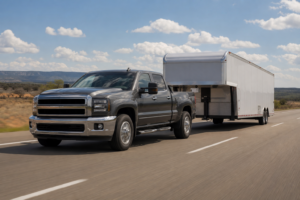
Whether you choose tilt or ramp, your truck needs to handle the combined weight of trailer plus load. Here are rough guidelines:
- 7,000-10,000 lb GVWR trailer: 3/4-ton truck (Ram 2500, GMC Sierra 2500HD, F-250) minimum
- 12,000-14,000 lb GVWR trailer: 1-ton truck (Ram 3500, Chevy Silverado 3500HD, F-350) strongly recommended
- 16,000+ lb GVWR gooseneck trailer: 1-ton dually with 5th wheel or gooseneck hitch; F-450/F-550 for heaviest loads
Read our full towing guide for a complete truck-to-trailer matching breakdown.
Browse Tilt and Equipment Trailers at Trailer Place
Trailer Place in Wharton, TX carries a full selection of both tilt trailers and equipment trailers from trusted brands including Diamond C, Iron Bull, Kaufman, and our own in-house STAR brand. We also offer financing for qualified buyers — including options for buyers with limited credit history.
Have questions about which trailer fits your job? Call us at (979) 532-1486 or stop by our Wharton, TX location. We serve customers across Texas and Louisiana, and we ship trailers nationwide.