Fencing contractors in Texas move a lot of heavy, awkward material every week: steel T-posts, wood and vinyl panels, concrete for post setting, rolls of wire, and often a skid steer or mini excavator for digging holes on ranch and rural properties. The right trailer setup keeps a fencing crew moving job to job without wasting fuel on a truck that’s too big or losing a day to a trailer that’s not built for the load. Here’s how to match a trailer to your fencing business in 2026.
Dump Trailers for Post Holes, Spoils, and Concrete
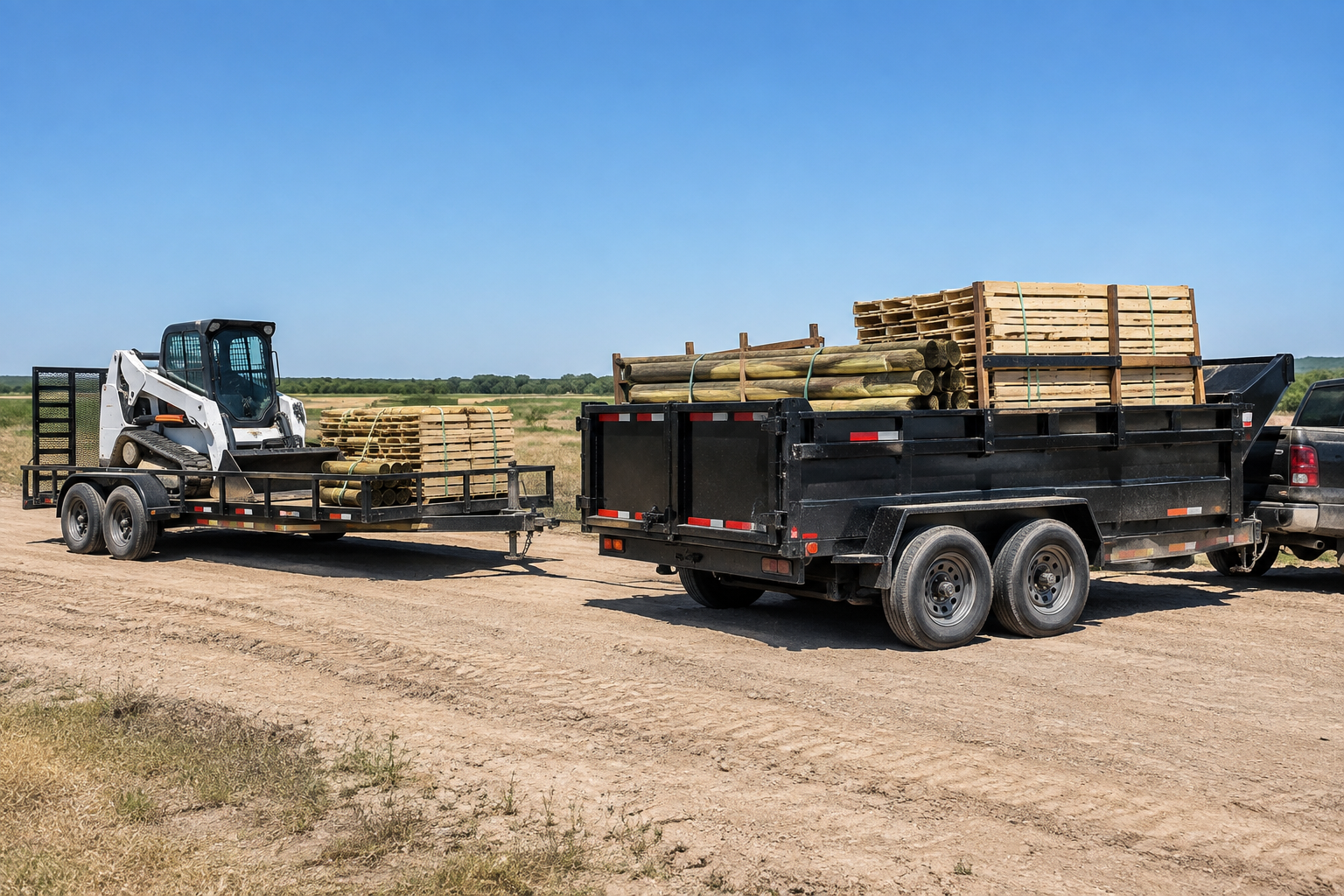
Every fencing job generates dirt spoils from post holes, broken-out old concrete footings, and leftover material at the end of a run. A dump trailer lets a crew load spoils on-site and dump them at a disposal point without shoveling by hand. For most fencing crews, a 12-14ft tandem-axle dump trailer with a 10-14k GVWR (roughly $9,500-$14,500) handles dirt, gravel for post bases, and demo debris. Crews also running a small skid steer to auger holes can use the same dump trailer to haul dirt off multiple properties in a single day, cutting drive time between the yard and job sites.
Utility Trailers for Posts, Panels, and Wire
A utility trailer is the workhorse for hauling T-posts, wood pickets, vinyl or wrought-iron panels, rolls of field fence and barbed wire, post caps, and hand tools. A 16-20ft tandem-axle mesh-side utility trailer (7-10k GVWR, $4,500-$8,500) carries a full day’s material for a residential or ranch fencing job and is easy to back into tight yard gates. Side rails keep long panels and rolls of wire from sliding off during transport, and a rear ramp gate speeds up loading fence post pullers and hand augers.
Equipment Trailers for Skid Steers and Mini Excavators
Larger fencing operations that dig with a skid steer, mini excavator, or auger attachment need an equipment trailer rated to carry the machine plus attachments. A 18-20ft tandem-axle equipment trailer with a 14-16k GVWR (about $9,500-$13,500) covers most compact skid steers and mini excavators used on rural and ranch fence lines. For crews running a heavier machine or hauling equipment plus a load of posts on the same trip, a low-profile Diamond C equipment trailer with a beavertail ramp makes loading and unloading faster on uneven ground.
Flatbed Trailers for Long Rail and Post Loads
Ranch fencing jobs using pipe rail, cedar posts, or long wood rail sections often exceed what fits neatly on a utility trailer. A flatbed trailer in the 20-24ft tandem-axle range (10-14k GVWR, roughly $6,500-$11,500) gives an open deck for long material that overhangs a shorter trailer, plus stake pockets for tying down loose bundles. Iron Bull flatbeds, built in Sumner, TX, are a common choice for Texas fencing contractors moving pipe and rail in bulk.
Single vs. Tandem Axle for Fencing Work
A single-axle utility trailer works fine for small residential fence-panel jobs with a half-ton truck, but most fencing contractors running material plus equipment day after day should go tandem-axle for stability and payload margin. Our single vs. tandem axle guide breaks down the towing and maintenance tradeoffs in more detail.
Financing a Trailer for Your Fencing Business
Trailer Place offers financing for fencing contractors adding a trailer to the fleet, including startup businesses and crews scaling up from one truck-and-trailer to multiple crews. See our trailer financing guide for down payment and credit details, and ask about our in-house STAR brand trailers built right here for contractors who want a tough, no-frills work trailer.
Get the Right Trailer for Your Fencing Crew
Trailer Place is a family-owned dealership in Wharton, TX (moving to Rosenberg in mid-2026), serving fencing contractors across Texas and Louisiana with dump, utility, equipment, and flatbed trailers in stock, financing available, and nationwide shipping. Call us at (979) 532-1486 to talk through GVWR and axle setup for your fencing business, or stop by the lot to see current inventory in person.