Guessing your load weight is how trailers end up overloaded, with blown tires and failed inspections. Weighing takes ten minutes and a few dollars. Here is how to do it, from the team at Trailer Place in Wharton, TX. Start by knowing your limits in our GVWR and GAWR guide.
Where to Weigh in Texas and Louisiana
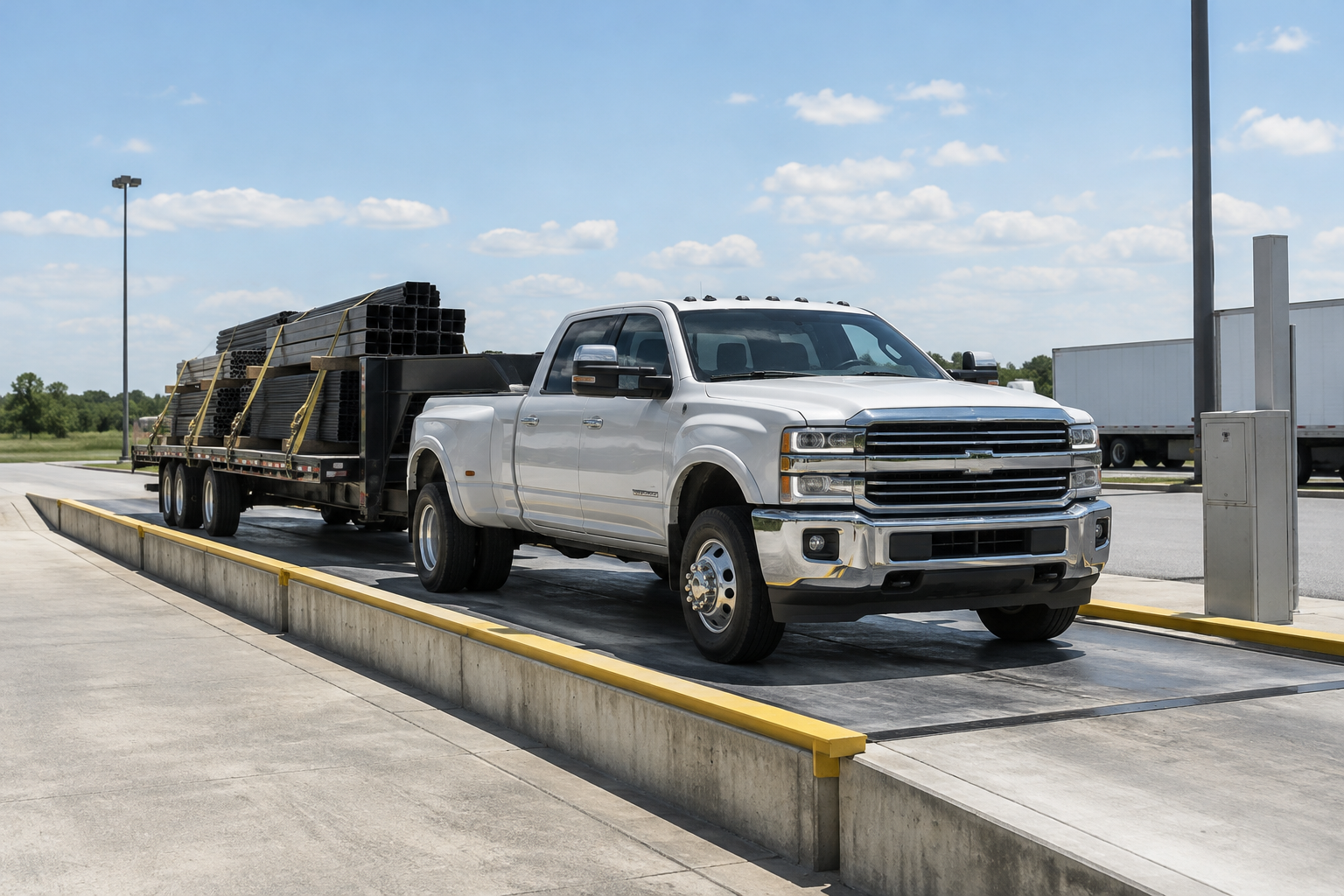
- CAT scales at most large truck stops, usually around $12 to $15 per weigh and open 24 hours.
- Landfills, feed stores and gravel yards often have public scales for a small fee.
- Portable axle scales are an option if you haul often, but fixed scales are more accurate for most owners.
The Three-Pass Method
- Pass 1: Truck and trailer together, fully loaded and hitched, with all axles on the platform.
- Pass 2: Truck steer axle and drive axle only, with the trailer axles off the scale. The difference from Pass 1 gives your trailer axle weight.
- Pass 3: Truck alone, with a typical fuel and passenger load. This helps you find tongue weight transfer.
What to Check
- Trailer GVWR. The loaded trailer weight must stay under the sticker rating.
- Tongue weight. Aim for 10 to 15 percent on bumper pulls and 15 to 25 percent on goosenecks. See our payload and tongue weight explainer.
- Truck rating. Compare your numbers to the door-jamb sticker for GVWR and rear axle limits.
- Axle balance. If one axle is heavy, shift the cargo and weigh again. Shifting cargo also helps with trailer sway.
Fixing an Overweight Trailer
Move heavy items forward of the axles, remove unneeded cargo, or step up to a higher-capacity model. A weight distribution hitch can help with a bumper pull, and a taller-rated gooseneck or dump trailer carries heavier loads with margin. Always run your pre-trip inspection too.
Shop Trailers at Trailer Place
Browse Diamond C, Iron Bull and in-house STAR trailers, with financing available. Family-owned Trailer Place serves Texas and Louisiana from Wharton, TX, moving to Rosenberg in mid-2026, with nationwide shipping. Call (979) 532-1486 to size the right trailer for your loads.