Underinflated or worn-out trailer tires cause more roadside breakdowns than almost any other issue we see at Trailer Place. Trailer tires wear differently than truck tires because they carry heavy, mostly static loads and rarely get a chance to “warm up” the way a tow vehicle’s tires do. Here is a practical guide to trailer tire pressure, spare tire requirements, and wheel bearing care for Texas and Louisiana trailer owners.
Why Trailer Tire Pressure Matters More Than You Think
Trailer tires (often called ST or “Special Trailer” tires) have stiffer sidewalls than passenger or LT tires. They are built to resist sway under load, not to flex and self-cool the way a car tire does. Running even 10-15 PSI low on an ST225/75R15 can spike heat buildup enough to cause a blowout within a few hours of highway towing, especially in Texas summer heat on asphalt that can exceed 140 degrees at the road surface.
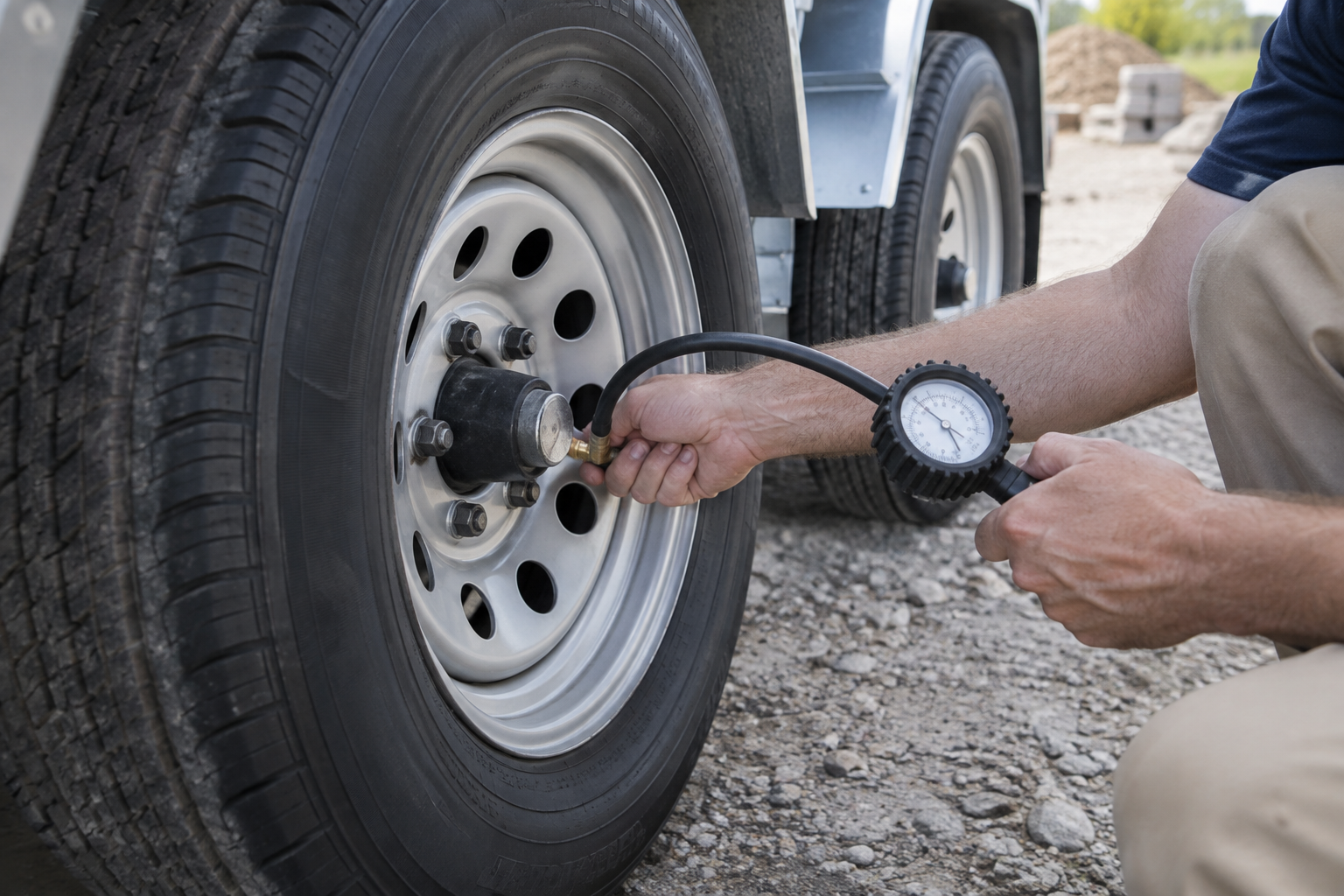
- Check pressure cold, before you have towed more than a mile, using a reliable gauge
- Inflate to the maximum PSI listed on the tire sidewall, not a “comfortable” middle number — ST tires are rated for their max cold pressure at max load
- Common ratings: ST205/75R15 (max ~50 PSI), ST225/75R15 (max ~65 PSI), ST235/80R16 (max ~80 PSI) — always confirm against your specific tire’s sidewall
- Check pressure every trip, not just monthly — ST tires lose air faster than standard tires and slow leaks are common around older valve stems
Spare Tire Requirements in Texas
Texas law does not require a trailer to carry a spare tire to be street legal, but if you are hauling livestock, equipment, or a loaded gooseneck trailer a long distance to a job site or sale barn, a spare is not optional in practice. A blown tire on a loaded tandem-axle trailer with no spare on hand can turn a same-day haul into an overnight wait for roadside service. We recommend a matched spare (same size, load range, and bolt pattern) mounted on a spare tire carrier, plus a bottle jack rated above your trailer’s per-axle GVWR and a torque wrench matched to your lug pattern.
Matching Tires to Trailer Type and Load
Tire sizing should match how the trailer is actually loaded, not just what came stock:
- Utility trailers (see our utility trailer lineup) in the 3,500-7,000 lb GVWR range typically run ST205 or ST225 tires — check load range matches your actual cargo weight, not just the trailer’s empty weight
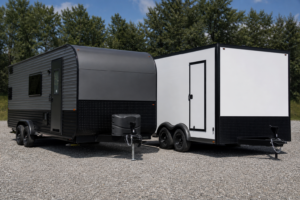
- Enclosed cargo trailers (browse enclosed cargo trailers) loaded with tools and equipment need Load Range D or E tires on tandem axles to avoid chronic underinflation for the actual carried weight
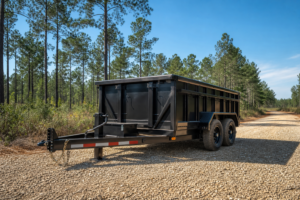
- Dump trailers (see dump trailers) hauling gravel, dirt, or debris put the most sustained weight on tires — Load Range E radials are the standard here, not bias-ply
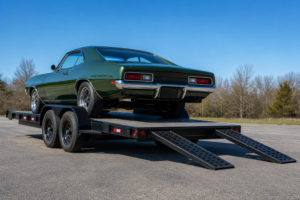
- Flatbed trailers (see flatbed trailers) hauling equipment near GVWR need tires rated for the full axle capacity, with a matched spare mounted for job-site hauls
Wheel Bearings Go Hand-in-Hand With Tire Care
A tire that runs hot from underinflation puts extra stress on the wheel bearing behind it. Pack or replace bearings annually if you tow frequently, more often if the trailer sits near saltwater (a common issue for Louisiana and Texas coastal owners) since bearing seals degrade faster in humid, salty air. Watch for a wheel that feels hot to the touch after a short drive, a grinding sound at speed, or visible play when you rock the tire top-to-bottom by hand — all are signs a bearing needs service before it fails on the road.
Building a Tire-Ready Trailer From the Start
If you are shopping for a new trailer, ask about tire specs up front. Diamond C and Iron Bull models we stock come with radial ST tires as standard on most tandem-axle configurations, and our in-house STAR brand livestock trailers ship with load-matched radials for the GVWR they are rated to carry. If you are deciding between a single-axle or tandem-axle trailer, keep in mind tandem axles split the load across four tires instead of two, which reduces per-tire heat buildup on long hauls.
For a full walkthrough of other pre-trip checks, see our trailer maintenance checklist. And if you are outfitting a trailer for off-road recovery work, our winch buying guide covers another piece of trip-ready equipment worth adding.
Get the Right Tires From the Start
Trailer Place stocks new trailers across every category with tire and axle specs matched to real-world loads, plus financing options (see our financing guide) to get you set up right the first time. We serve Wharton, TX (moving to Rosenberg mid-2026) and ship nationwide, with a strong customer base across Texas and Louisiana. Call us at (979) 532-1486 to talk through the right tire and axle setup for your next trailer, or to get your current trailer’s tires and bearings inspected before your next haul.